
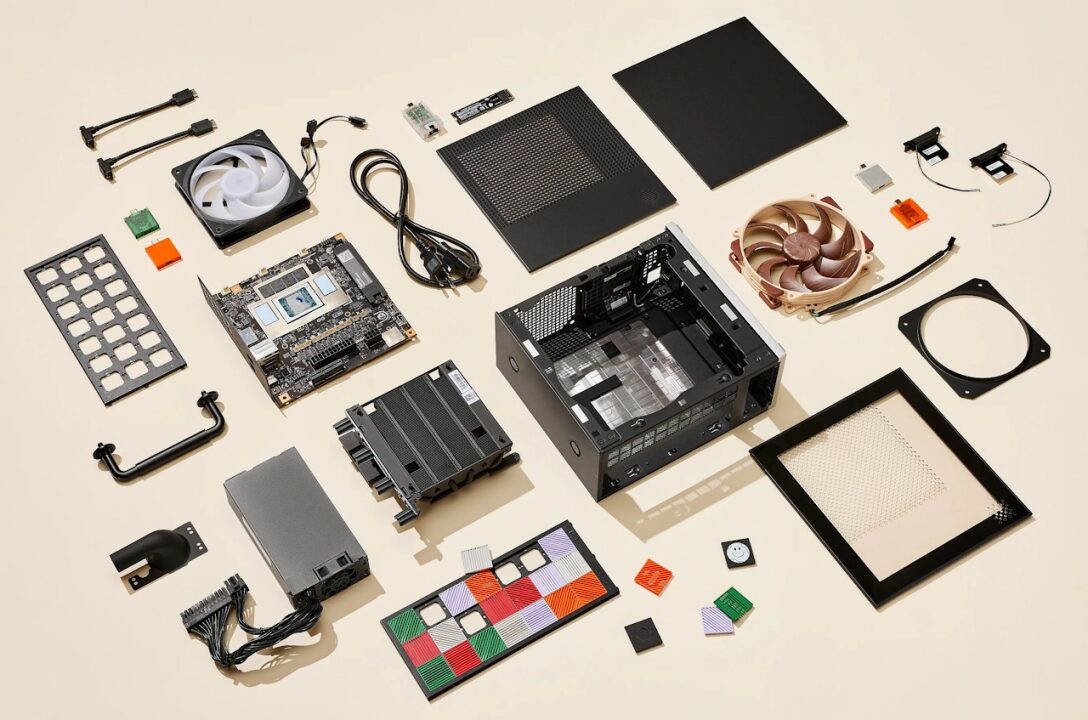
Framework computers aren't just interesting for their specifications, but also for their extraordinary flexibility. Designed for quick and (not too) painful upgrades, their modules have changed the way laptops are configured, repaired, and reused. However, Framework has now surprised us with the announcement of a new Mini ITX desktop system, based on the fastest APU in the world: the AMD Ryzen AI Max+ 395, which brings a Radeon 8060S graphics chip.
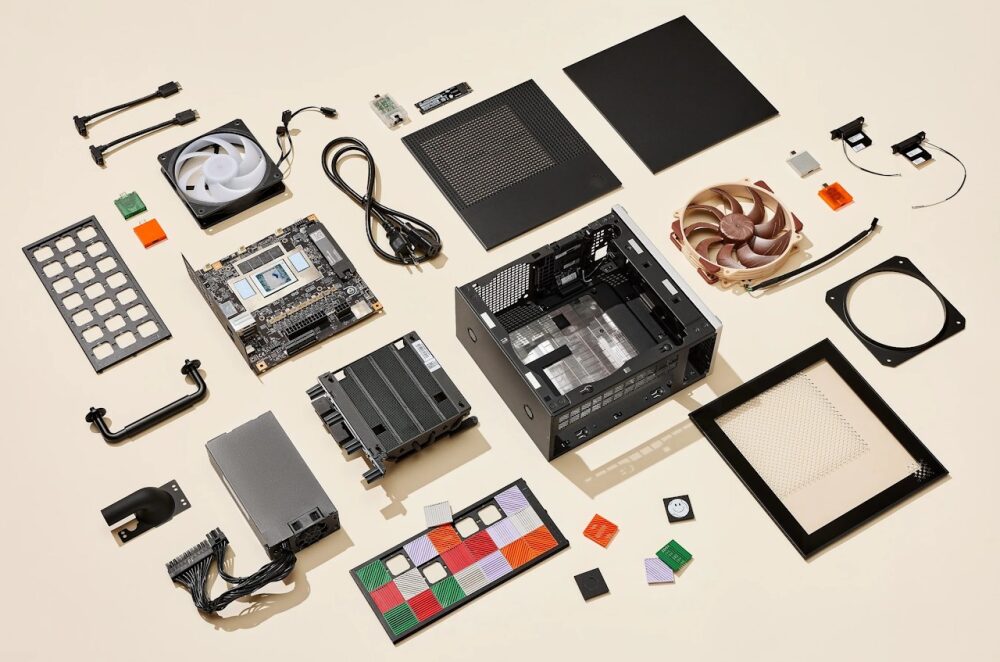
Framework Desktop: Integrated Gaming with AMD Hardware
The first thing that comes to mind is “why?” Why has Framework chosen to explore the desktop space, where things are already quite modular and easy to replace? ATX power supplies and cases, PCI Express boards, DDR4 and DDR5 memory, SATA drives, NVMe units, multiple USB flavors… many manufacturers dream of eliminating all of that from the ground up (and some have succeeded), but Framework stands out for its flexibility, a virtue that already exists in conventional PCs.
Its brand-new Framework Desktop seems to go in the opposite direction, using an integrated APU and memory soldered to the PCB. However, “gaming” Mini PCs are experiencing a golden moment thanks to AMD's new silicon, and I think the answer to my original question lies there.
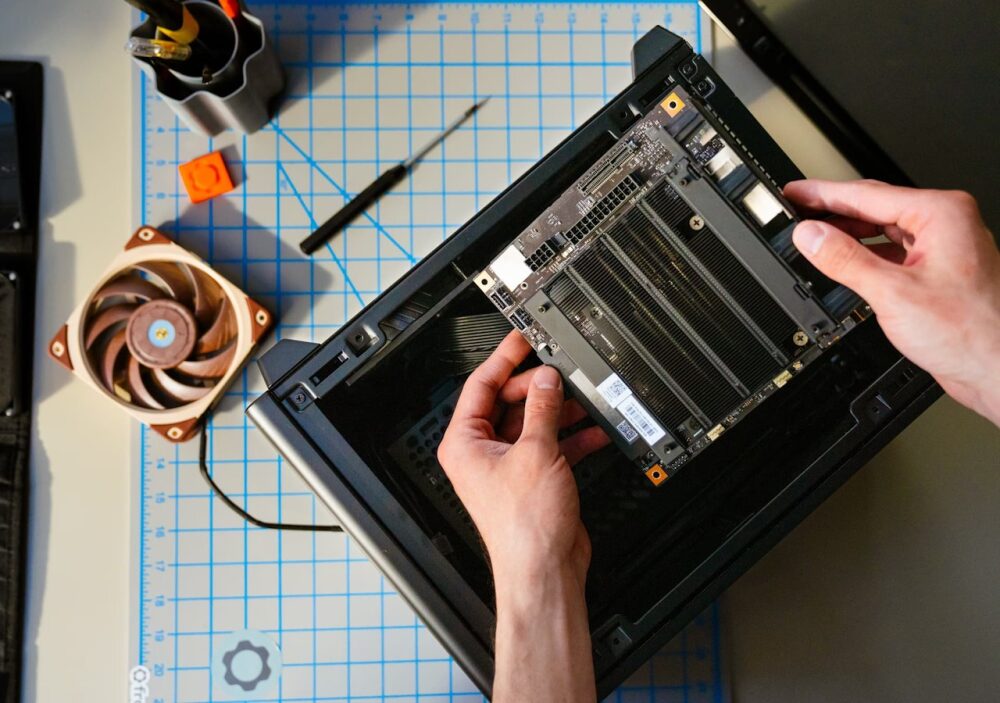
The system will be available in three configurations. The first uses a Ryzen AI Max 385 (8C/16T, 5 GHz Turbo) with a Radeon 8050S graphics chip, and comes with 32 GB of LPDDR5x at 8000 MHz. The second adopts the Ryzen AI Max+ 395 (16C/32T, 5.1 GHz Turbo), equipped with the Radeon 8060S video (which has made a lot of noise on YouTube), and 64 GB of LPDDR5x-8000. Finally, the maximum configuration simply expands the RAM of the intermediate system, fixing its maximum at 128 GB.
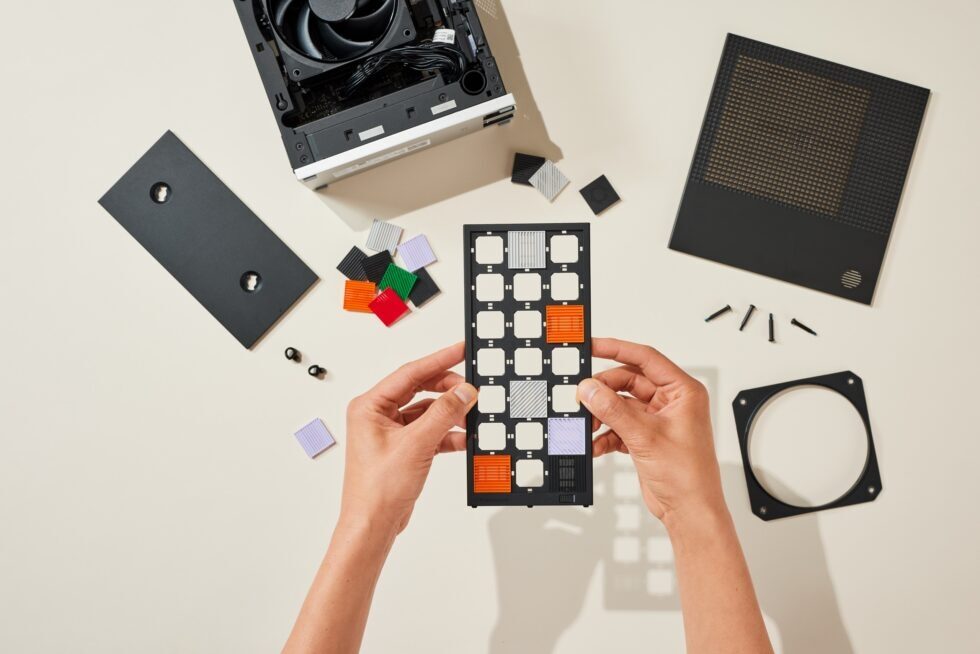
Now, let's not be fooled by the “APU” label. These new Ryzen AI Max chips definitely run and hit above their class, but the story doesn't end there: Framework decided to offer all that hardware in a volume of just 4.5 liters, while respecting (to a certain extent) the modularity of its laptop siblings. In addition to being able to customize the front of the case with a 3x7 grid, there are also spaces for two dongles at the bottom. The power supply is Flex ATX (a relatively available format), and the fans are 120 millimeters. Needless to say, many things are optional here, and Framework will enable the possibility of purchasing a motherboard separately, to install it in another case.
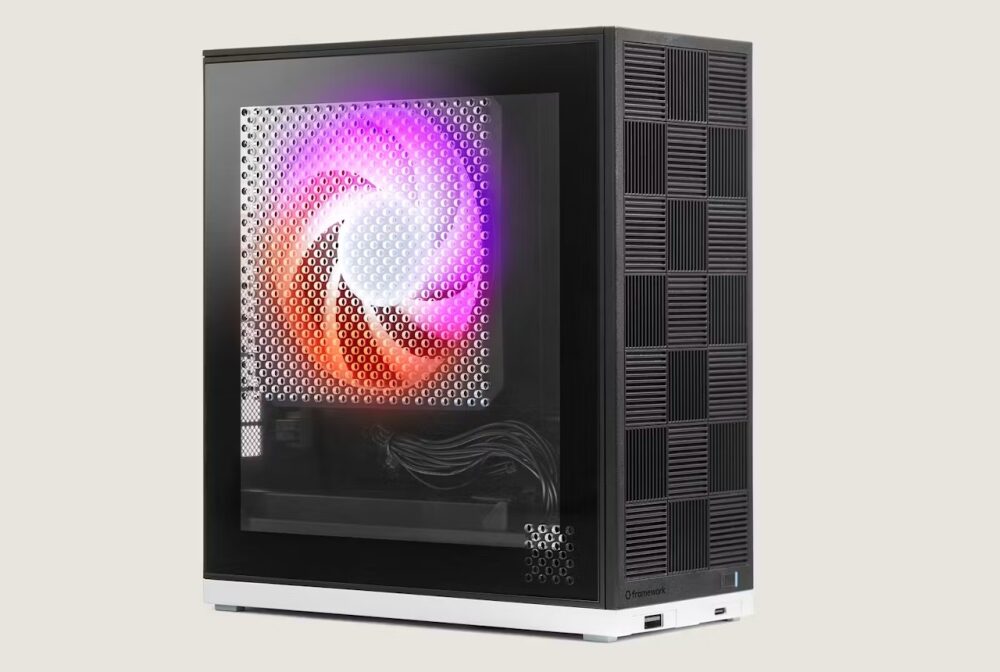
But why is the memory soldered? In one word: performance. The only way to achieve the 256 GB per second that these Ryzen AI Max chips offer is to remove SODIMM sockets from the equation. The last question takes us to software: Framework guarantees its operation with Windows and the main Linux distros, but expects users to be able to install alternative options like Bazzite or Playtron (and why not, SteamOS).
Finally, prices: $1,099, $1,599, and $1,999. Motherboard only? $799, $1,299, and $1,699. Pre-order with a $100 deposit, and deliveries in the third quarter.
Official site: Click here. Official announcement: Click here.


