
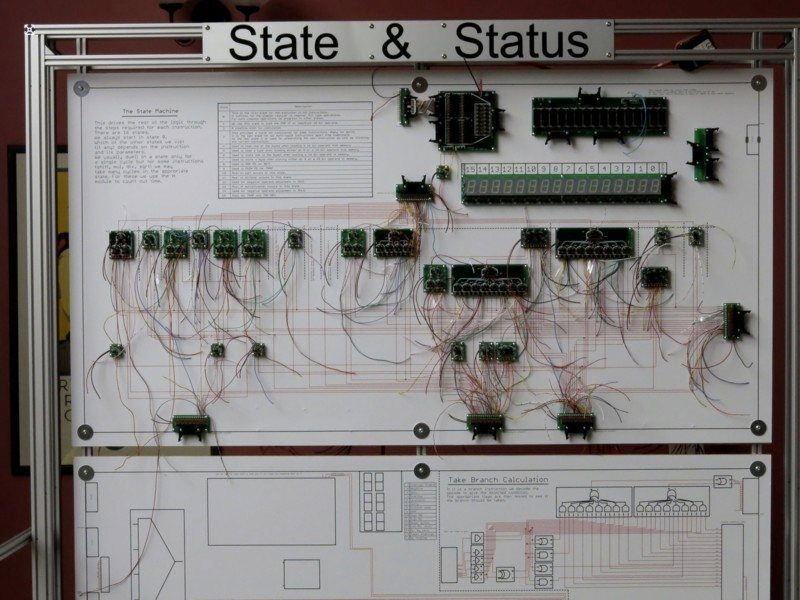
These days, accessing a processor is a matter of finding a model compatible with our motherboard and buying it. However, that shortcut gives us the final product, without any specific detail about its logic. The alternative is to make our own processor at a much larger scale, the goal pursued by the Mega-Processor project. Its creator plans to connect more than 14,000 transistors, and the final design will be so large that it probably won't fit in his house...
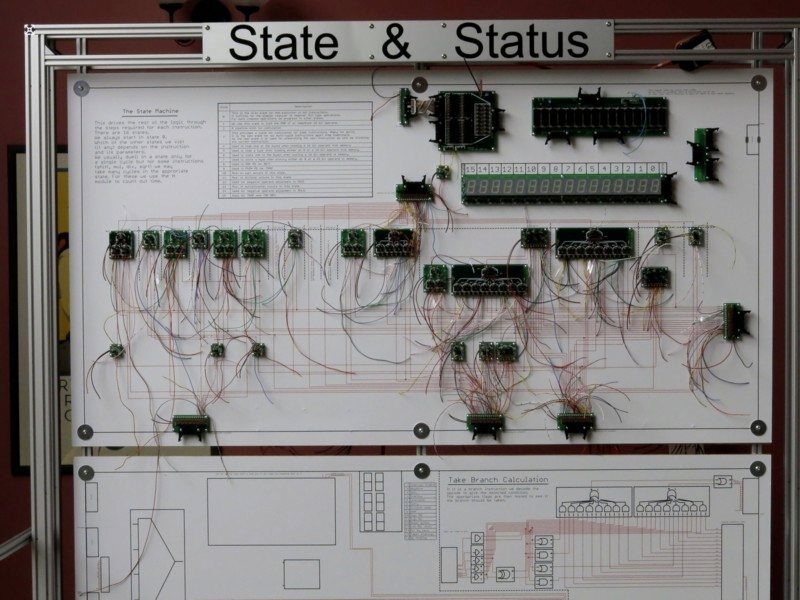
A relevant fact when mentioning specifications in a processor or graphics card is the number of transistors present. The most recent models accumulate billions of transistors inside a single chip, irrefutable proof of the extraordinary advances in miniaturization. Now, reducing the size of a processor offers multiple advantages... but it is not strictly mandatory. If someone decided to abandon the nanometric scale and build their own processor with larger transistors, the truth is that it should work without issues. That is the plan of James Newman, responsible for the project known as Mega-Processor.
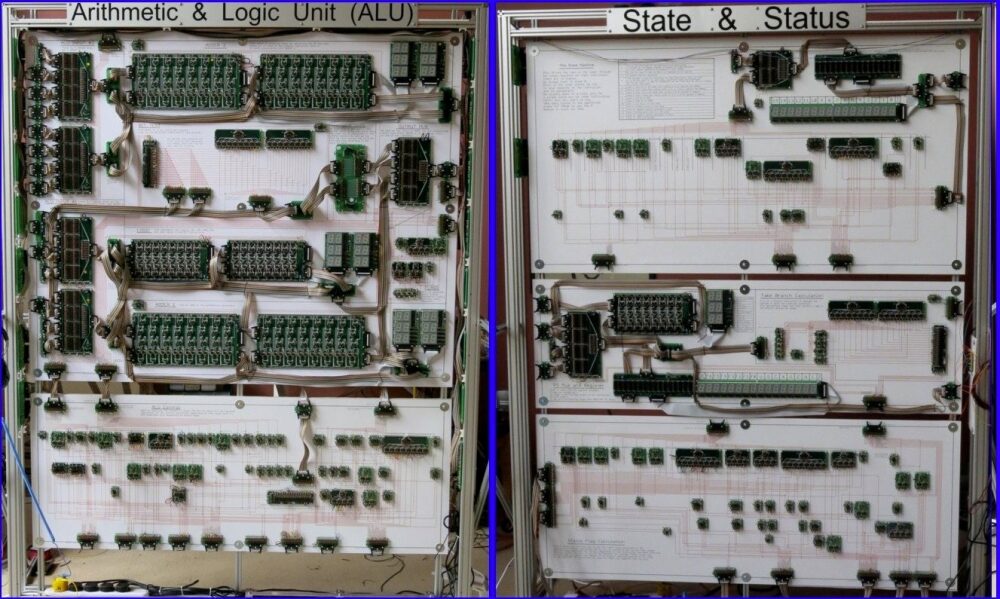
Once finished, his 16-bit system will be composed of about 14,000 transistors, which in itself is impressive, but Newman has another twist. The transistors will be accompanied by 3,500 LEDs, which will allow observing the movement of data and the activation of each of the parts that make up the Mega-Processor. In total, the system will work at a speed of 20 KHz, and will have 256 bytes of RAM at its disposal. By way of comparison, the historic Intel 8080 from 1974 had 4,500 transistors inside, but operated at 2 MHz, a performance difference impossible to ignore. Even so, Newman is not investing time and money in the Mega-Processor to break speed records, but for the personal desire to prove that it is possible to build it.
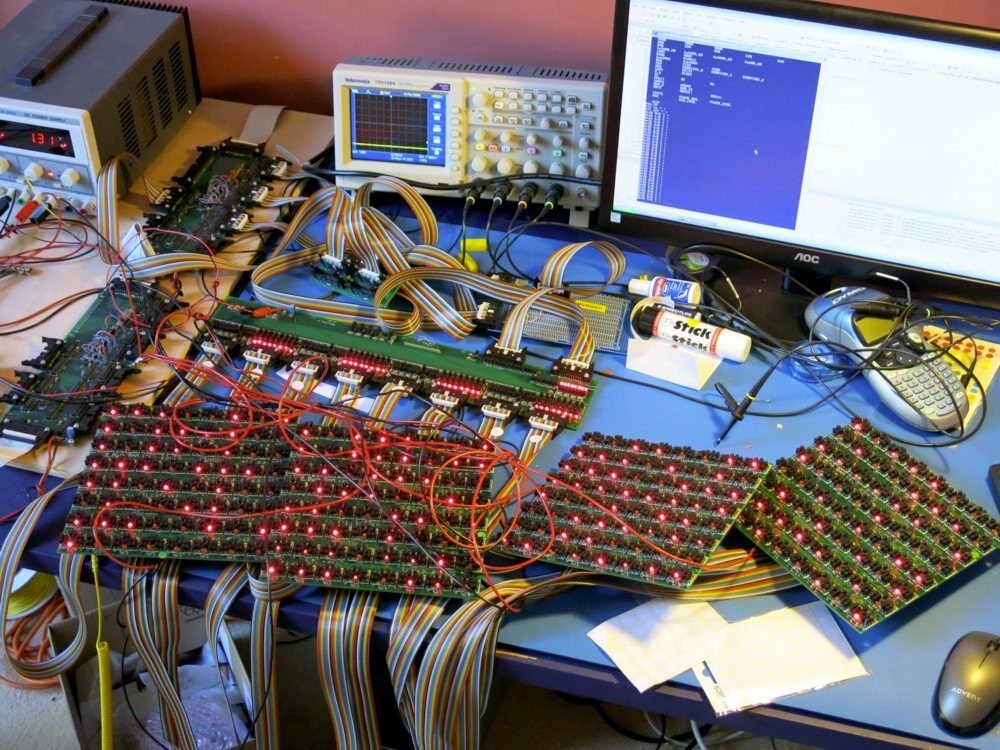
According to the plans on the official site, if Newman manages to find a sufficiently large place, and nothing explodes during the process of soldering each component, the Mega-Processor will need something like 14 meters of wall by 2 meters high to install all modules. The Mega-Processor was supposed to be finished by the end of 2014, but Newman admitted that date was too optimistic. With a bit of luck, the project will be ready before the end of summer.


