
Unlike their American adversaries, the Russians did not detonate any nuclear weapon during the Second World War. However, the “need” to study the effects of radiation on humans and animals prompted the Soviet authorities to detonate an atomic bomb in 1954 in the province of Orenburg. At least three nearby villages - Makhovka, Olkhovka and Yelshanka - were affected, and thousands of people died during the experiment and the following years.
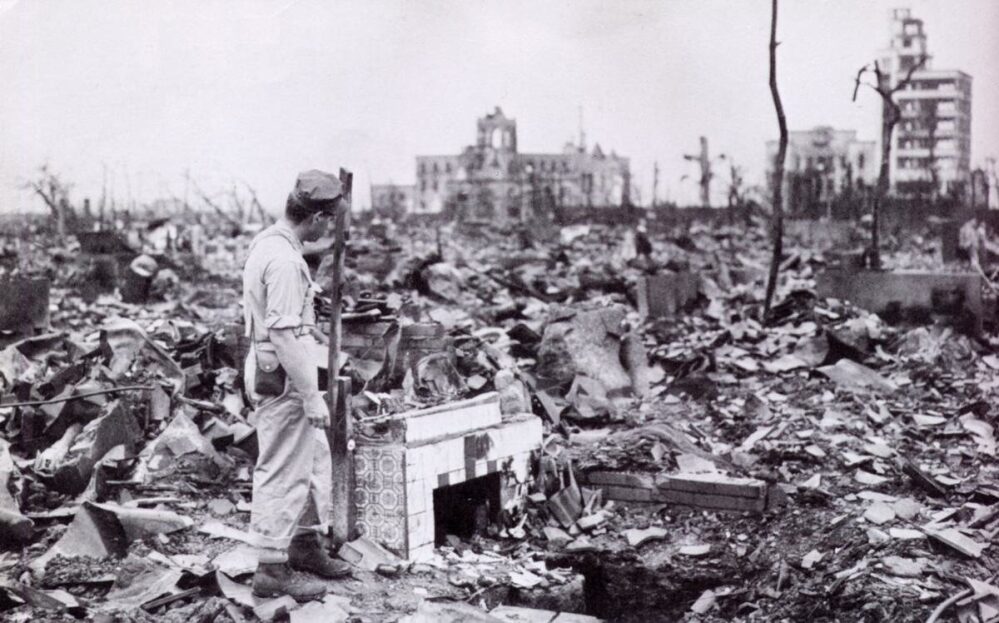
Despite the terrible and undeniable results obtained by the Americans when they bombed Nagasaki and Hiroshima with nuclear devices in 1945, the Russian military wanted data to understand how effective (and harmful) such bombs could be. As has happened in many countries often throughout history, a secret experiment was designed to obtain first-hand information, involving troops and civilians who would not be informed of the potential dangers of the situation they were about to live.
The Exercise “Joe-8”
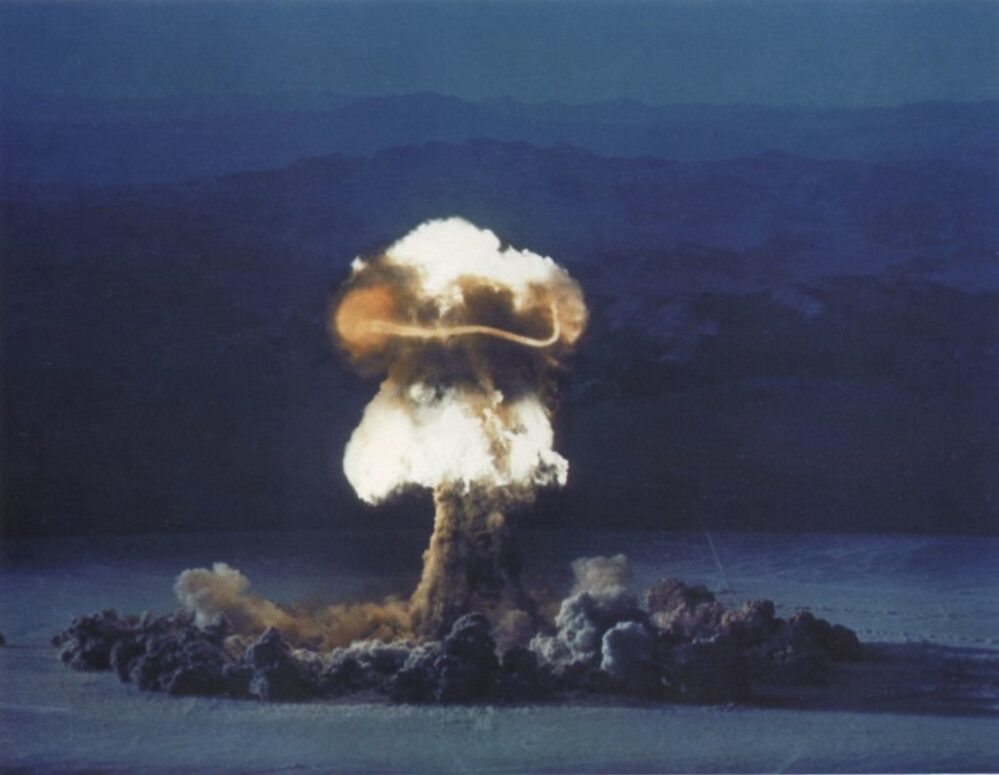
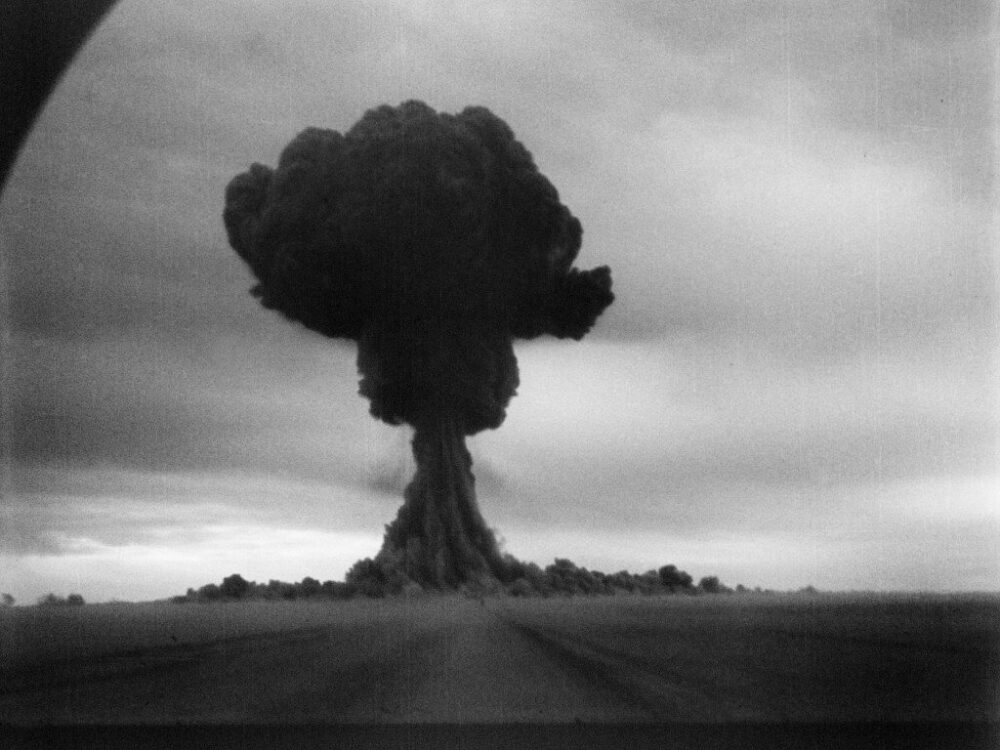
In 1954, preparations began for what would be the first nuclear test conducted during a military exercise in the Soviet Union. Under the code name “Joe-8,” the experiment revolved around the detonation of a 40-kiloton atomic bomb at about 350 meters above the ground. The chosen site was a military training field located north of the village of Totskoye, about 40 kilometers from Buzuluk in Orenburg, south of the Urals.
Finally, the date designated for the “military exercise” was September 14, 1954, and the troops and vehicles needed for the event began to be mobilized. More than 45,000 soldiers, 600 tanks, 600 armored vehicles and a large number of aircraft headed to the area. Civilians in nearby villages were completely unaware of what was about to happen, and some historians suggest - although there is no irrefutable proof - that dozens of prisoners were moved to the site to serve as “test specimens.”
The main objective of the maneuvers was to learn first-hand, in a “controlled environment,” the effects that an atomic attack would have and how military operations might be conducted in such a scenario. The test site had been carefully chosen: the terrain in Totskoye is very similar to the European theater of operations where Russian generals imagined they would have to fight a war against NATO forces.
The experiment was extremely important for the nation, and a large number of dignitaries attended its development. Several Marshals, General Secretary Nikita Khrushchev, Defense Minister Bulganin, and the scientist in charge of the Soviet nuclear project, Igor Kurchatov, were present on the day of the detonation. The nuclear device, known as the RDS-3, was dropped from an altitude of 8,000 meters by a Tu-4 bomber and exploded with the full force of its 40 kilotons about 350 meters above the fields of Totskoye.
A few moments later, when the mushroom cloud had not yet fully risen, fighter aircraft and artillery forces opened fire on targets near the epicenter of the explosion. Three hours later, amidst fires caused by the heat of the bomb and marching over highly radioactive ground, infantry troops advanced toward “ground zero.”
In a circular area 300 meters in diameter, absolutely nothing remained, only scorched earth. The next five kilometers were an inferno of fires, which affected several neighboring villages, such as Makhovka, Olkhovka and Yelshanka, which had to be evacuated. The wind, blowing at about 20 kilometers per hour, helped spread the radioactive dust over the surrounding areas.
https://old.neoteo.com/el-evento-tunguska-que-ocurrio-realmente-14431/
It is not known exactly how many civilians and soldiers died as a result of this experiment, but accounts indicate that many soldiers - on foot and without adequate protection - carried out combat maneuvers less than 800 meters from the epicenter of the explosion. The Soviet Union has never been, and much less in those years, fond of providing confidential information to the press, but estimates based on the power of the explosive used and the positions of troops and civilian populations have allowed for estimates of “hundreds” of deaths within a few days.
Thousands of people suffered serious health problems for the rest of their lives, and it is known that at least the pilot and navigator of the bomber tasked with dropping the RDS-3 died from leukemia and bone cancer. The evacuated peasants and villagers were quickly returned to their places of origin, where they continued to cultivate and consume the produce of their lands. Many of them also developed cancer.
Aftermath and Long-Term Effects
Much later studies, conducted in 1997, show that the inhabitants of that region of Orenburg have very high rates of radiation-related diseases. Even today, about 200 kilometers from the center of the explosion, there are more cases of cancer than in the rest of the country. Some sources maintain that this rate is even twice as high as among evacuees from Chernobyl in 1986.
No one can doubt that such an experiment is an absolute atrocity. However, and contrary to what many might believe, the former USSR has not been the only one to use large groups of people as guinea pigs. It is impossible to list them all, but from American scientists who once injected radioactive iodine into people (who did not know what was being done to them) to see what disorders it caused, to pharmaceutical multinationals that have on several occasions tested experimental drugs in the third world, humanity has been victim of these situations dozens of times. Are these cases that belong only to the past? It is almost impossible to find proof that things like this happen today. However, we can never be sure. Don't you think?
https://old.neoteo.com/el-proyecto-manhattan-por-dentro/


