
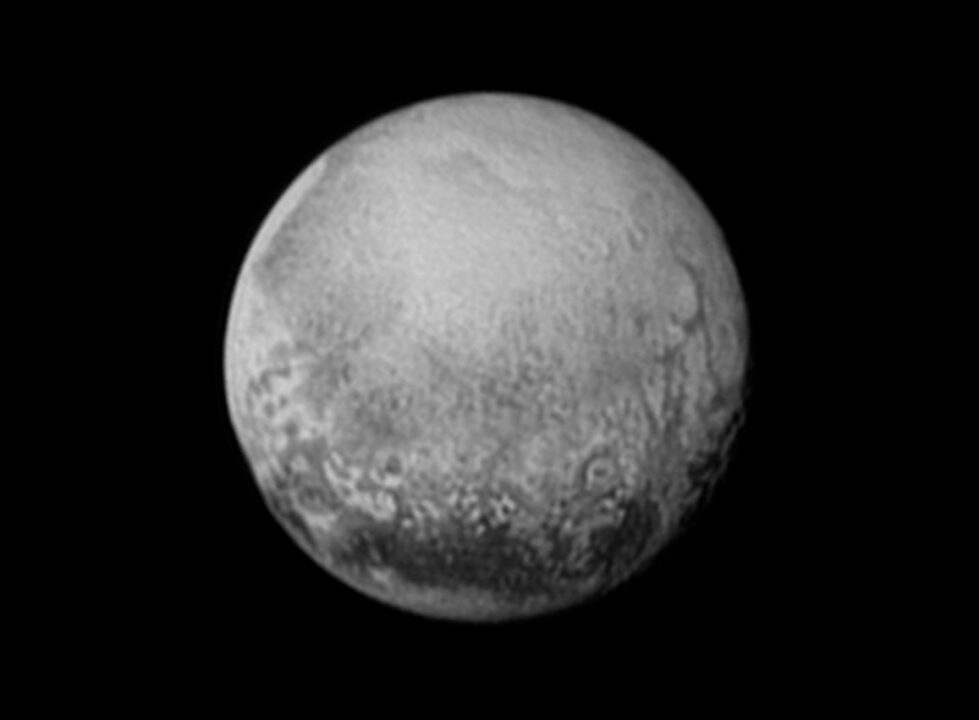
The human species has an appointment tomorrow. It is an appointment that probably will not repeat itself for a long time. The wait lasted just over nine years, so the nervousness is logical. However, we cannot think twice, nor take a step back. Pluto is out there, and the New Horizons mission continues to approach. With each new frame, astronomers set aside food, drink and sleep, but the best... is yet to come.
From Discovery to Dwarf Planet
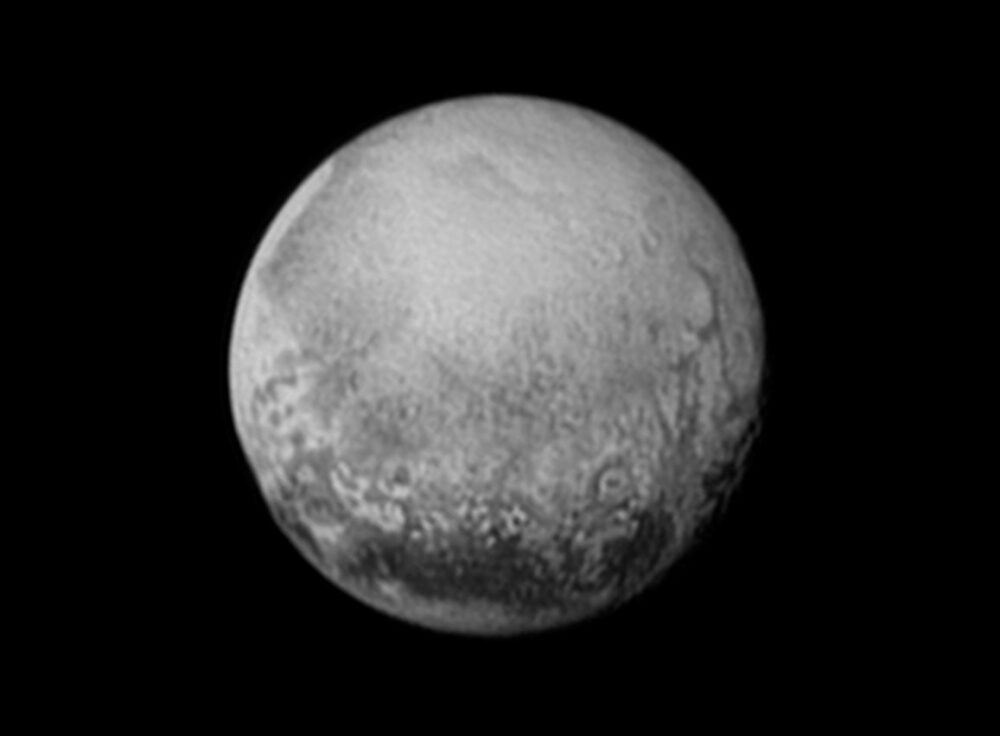
Clyde William Tombaugh discovered the celestial object that would later become Pluto on February 18, 1930. A couple of weeks later, an 11-year-old English girl, Venetia Burney suggested the name Pluto, the Roman god of the Underworld who could make himself invisible (the Disney character took the planet's name, not the other way around), and on the first day of May that year, the name was confirmed. Over the years, Pluto was subjected to various studies, especially regarding the calculation of its mass (in 1931 it was thought to be similar to Earth), but its situation changed completely in September 2006, when it was reclassified as a dwarf planet. In that same year (January to be precise), NASA's New Horizons mission began its journey. Nine years and five months later, New Horizons is less than 1.6 million kilometers from Pluto.
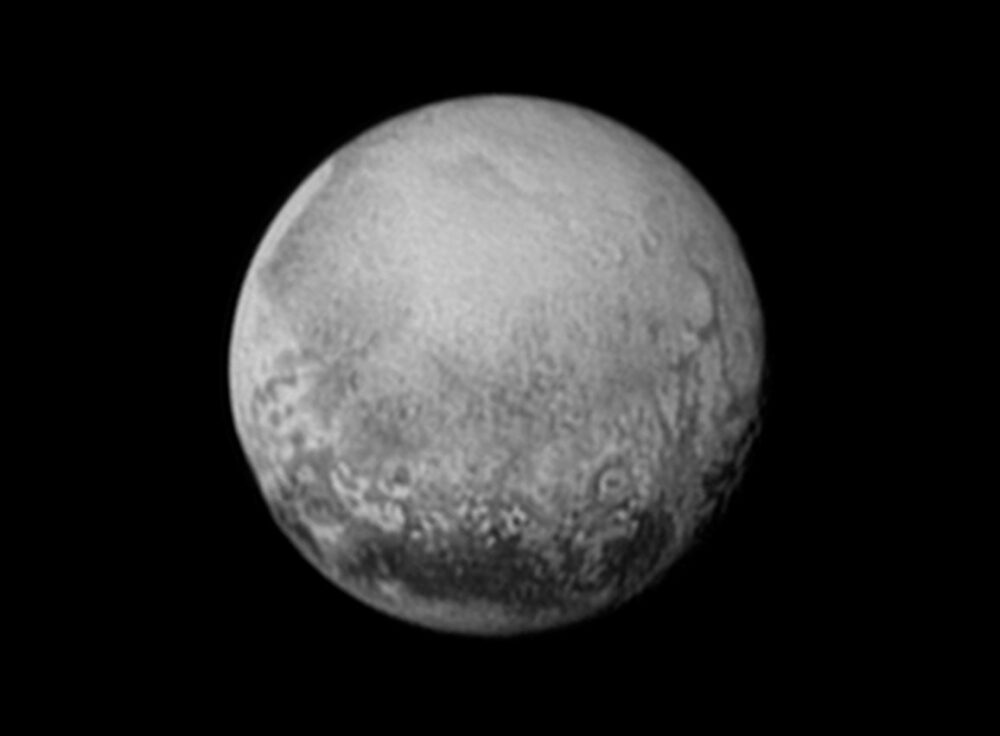
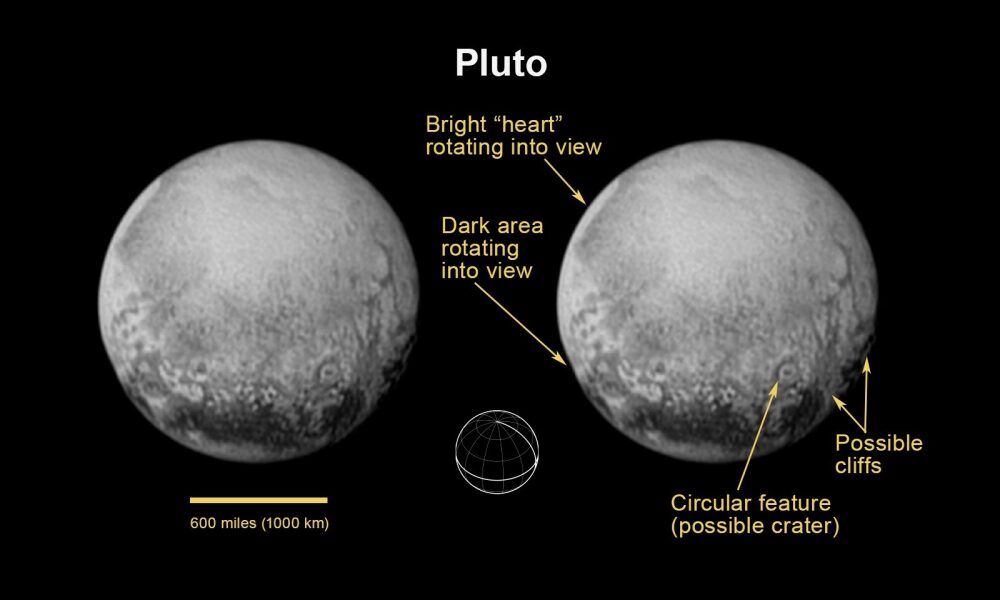
Pluto, Earth. Earth, this is Pluto. The resolution of the images improves with each step, but we must be patient: the probe's transmissions take four and a half hours to reach Earth, and after so long in space, technical quirks are inevitable (on July 4 a software error occurred and 30 images were lost). Even so, geology and geophysics experts are blown away by the material received. The most recent image, dated July 11, raised the possibility of cliffs on the planet's surface, while a circular feature would be a crater caused by a massive impact. Pluto's rotation will soon allow us to see in greater detail the region that has a "heart shape", although we must not forget that Pluto is not alone.
Charon, Pluto's Moon
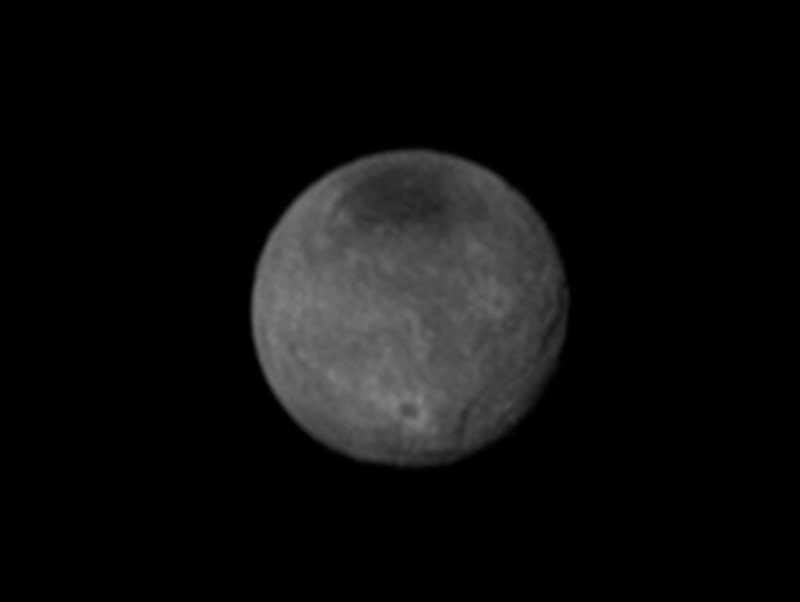
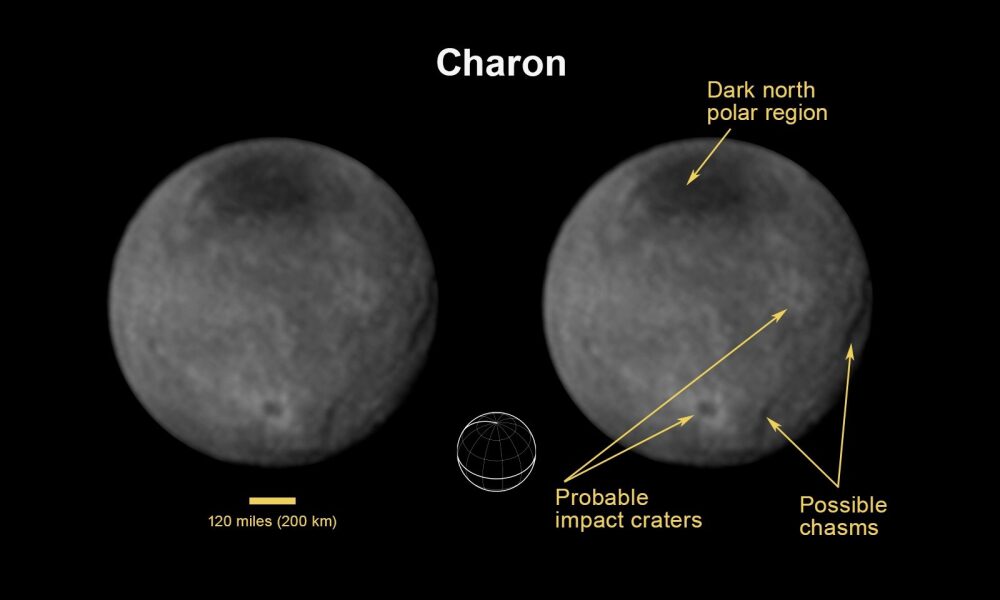
New Horizons' privileged position enabled the capture of images of Charon, Pluto's main moon. So far, astronomers have recorded a dark polar region, several impacts, and what appears to be a series of chasms. The New Horizons probe will pass about 28,000 kilometers from Charon, so we expect even more precision. The three main objectives of New Horizons are to establish a geological profile of the Pluto-Charon system, create a map of the chemical compositions on their surfaces, and characterize Pluto's atmosphere. The opportunity is unique. As of this writing, there are 24 hours, 38 minutes and 40 seconds left. You can't miss it.


