
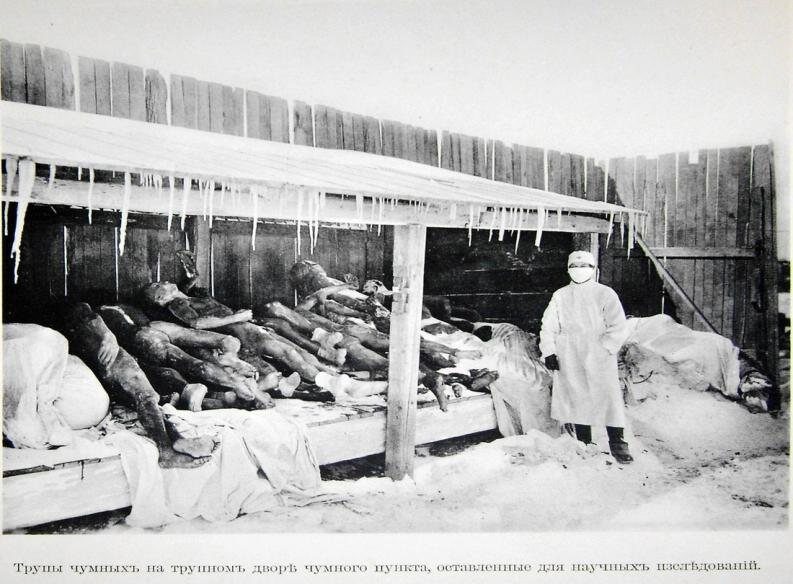
Biological warfare is almost as old as war itself. It is known that in the sixth century BC the Assyrians poisoned wells with a fungus of rye, and they were hardly the first to use this type of weapon. In modern times it probably falls to Japan to have the “honor” of being the ones who experimented most with pathogens on humans, using its infamous Unit 731. From 1932 until the end of World War II, that country contaminated thousands of prisoners with shigella, plague, meningitis and anthrax, among other things, and killed about 200,000 Chinese using biological weapons. This is its story.
Bacterial warfare, contrary to what one might think, is not a modern invention. Long before humanity knew what type of agent caused certain diseases, they used contaminated elements - or even corpses of people who had died of contagious diseases - to transmit these ailments to their enemies. One of the oldest recorded cases dates back to about 500 or 600 years before our era, when the Assyrians poisoned drinking water wells with a fungus that grew on rye. The ergot fungus caused in those who drank that liquid a disease that would later be known as “St. Anthony’s fire” and that gangrened their extremities.
The Tartars, during the siege of the Crimean city of Kaffa in 1346, launched plague-infested bodies with catapults at their enemies, infecting its inhabitants with the terrible plague. It is also known that during “the conquest of the West”, the white settlers who expanded through the United States of North America “gifted” the Indians, who were reluctant to give up their territories, with blankets that had been used by patients with smallpox, exterminating entire tribes.
Unit 731
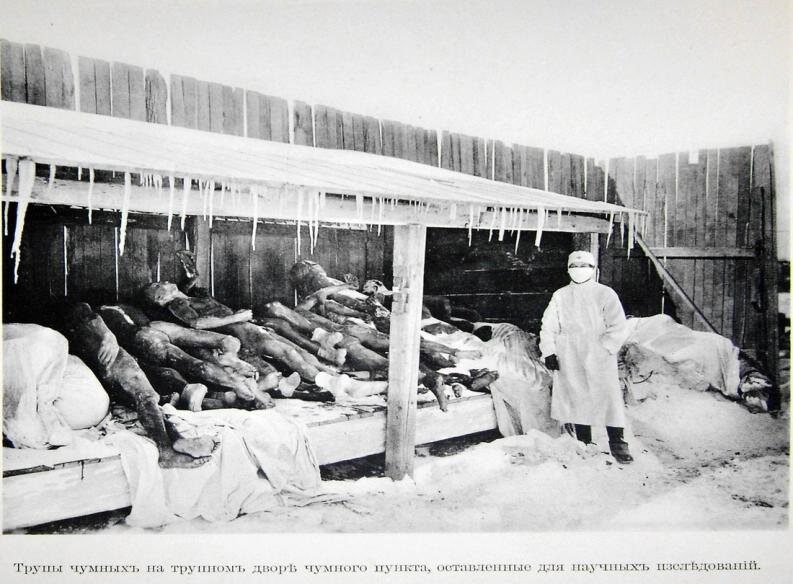
But - within the documented stories that have managed to become public - the ones who experimented most with this type of weapon, even without knowing exactly how they worked, were the Japanese. During the so-called Second Sino-Japanese War (1937-1945) and the Second World War, that nation developed a covert program of research and development of biological weapons called Unit 731, under the control of the Imperial Japanese Army. In this context, experiments - mostly lethal - were carried out on humans.
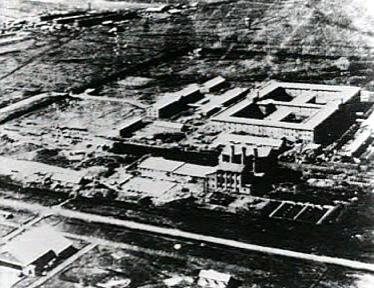
The program was officially known as the Epidemic Prevention and Research Laboratory of the Kempeitai Political Ministry, and was born with the aim of counteracting the ideological influence of the enemy. Unit 731, camouflaged as a water purification plant and located northeast of the Chinese city of Harbin, was responsible for the most terrible war crimes committed by soldiers. The first phase of the program consisted of developing methods to counteract communist propaganda coming mainly from China, but soon things got much worse.
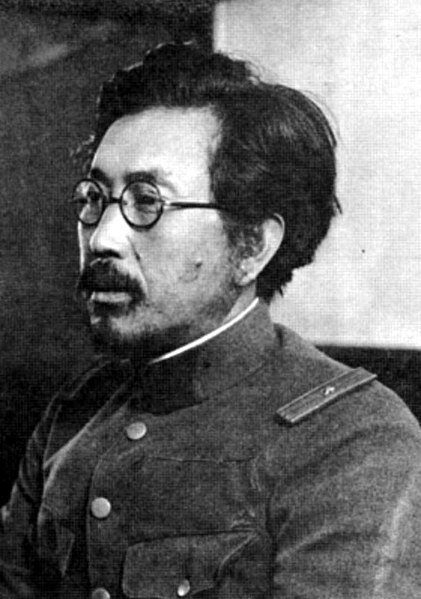
Unit 731 became an entity destined to promote the supposed Japanese racial supremacy, elaborate racist theories to support those assumptions, counter-espionage tasks and - finally - carry out the most cruel experiments on humans. It is estimated that about ten thousand people, both civilians and military, mostly of Chinese, Korean, Mongolian and Russian origin, lost their lives during the experiments carried out at Unit 731. They came from surrounding populations, and there were hundreds of children, thousands of women, babies and elderly people.
At the facilities, “research” was carried out on bubonic plague, cholera, anthrax and tuberculosis. Prisoners were inoculated with different pathogens, and then the way the disease developed and how they infected each other was studied. Practically all experiments and dissections were performed without using any kind of anesthetic, because those in charge of directing such a research center believed that its use could influence the results, so they limited themselves to tying up prisoners and extracting tissue samples or even complete organs for analysis.
Among other experiments, fleas were used to transmit bubonic plague. Prisoners were used as “hosts” for fleas, to produce millions of these insects. Once enough contaminated fleas were available, they were thrown over Chinese populations causing - depending on the source consulted - between 200 and 400 thousand fatal victims, almost all of them civilians. Unit 731 is considered today one of the most atrocious human experimentation centers that has ever existed.
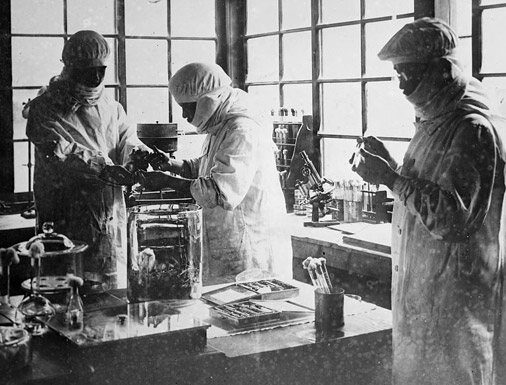
Unfortunately it was not the only one, and it is possible that several similar centers existed in other countries, perhaps with smaller size. Dozens of Guatemalans, for example, still claim the United States for the damages caused - blindness, dementia, chronic pains, etc. - when in the middle of the last century their troops inoculated them (by force and without explaining what it was) with syphilis. Humanity, the same one that has produced geniuses like Einstein, Picasso or Beethoven, has created this kind of horrors, of which hardly anyone can be proud. Don’t you think?


