
Two weeks ago, Scotty from the Strange Parts channel shared with the public one of his most impressive projects: building an iPhone from a block of aluminum. It demanded a year of work, but the final result was fabulous from every point of view. Now, Scotty recognizes that it is not easy to access CNC machines like the one he used, and in his latest video he decided to explore the possibility of adapting the design to 3D printers, so that anyone can play with different filaments and create their own cases.
3D printing and CNC technology are truly extraordinary. What once seemed limited to professional environments and huge factories can now exist in small workshops, producing rapid prototypes in a matter of hours. Personally, I believe 3D printing shows its full potential when it comes to reproducing objects. Yes, many original creations are impressive, but nothing melts my brain more than cloning the battery cover of a remote control... after the previous one jumped into a parallel dimension.
Of course, Scotty from the Strange Parts channel has bigger goals than that, and after having built an iPhone using a block of aluminum as a base, he now wants to confirm whether it is possible to adapt the general design for reproduction on 3D printers.
An iPhone 12 Case, Made with a 3D Printer
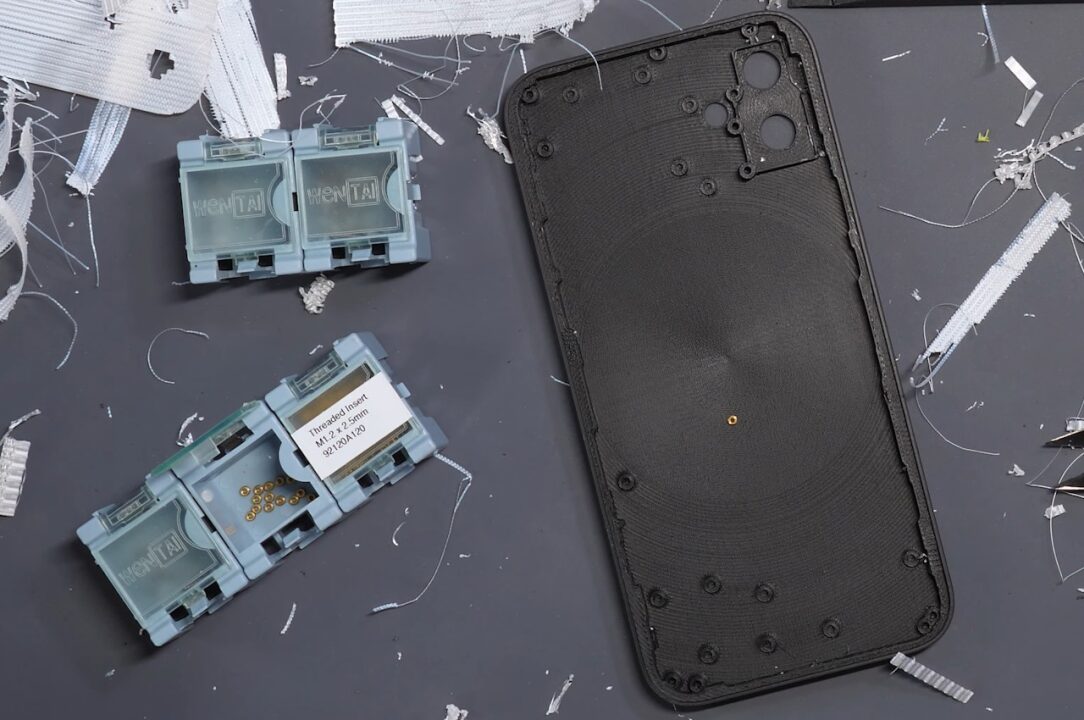
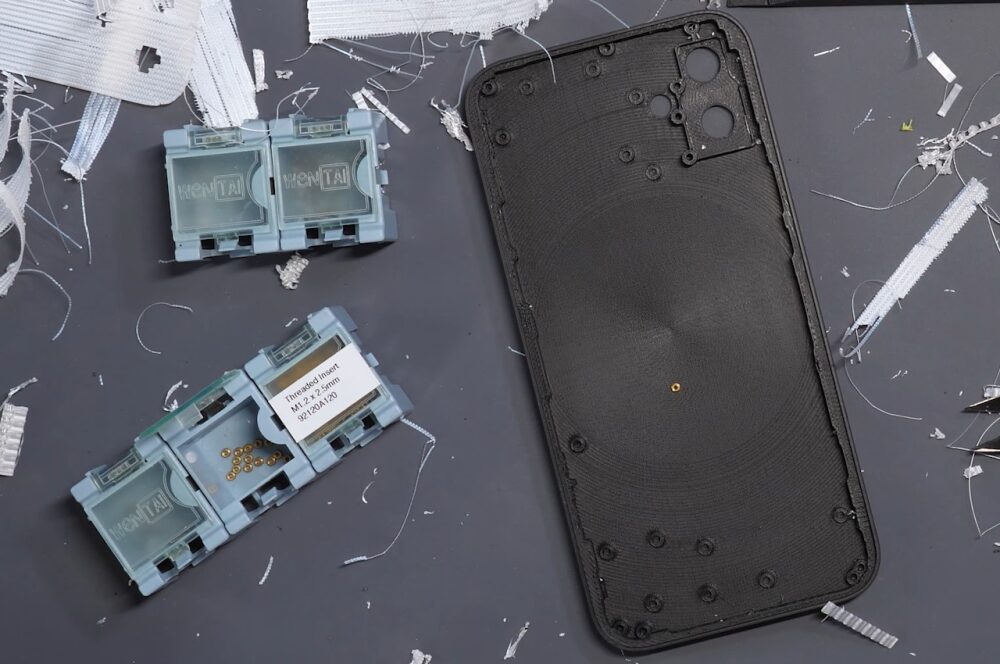
The first step was to print a copy of the model he made in aluminum. The screen and camera fit perfectly, but the buttons, SIM tray, and screw anchor points definitely needed adjustments. In fact, Scotty opted for threaded inserts to avoid fighting with the screws, and their installation was very simple after the modification (all you need is a soldering iron).
Another problem with the printed case is its flexibility. Both the screen and the glass on the back help the phone gain rigidity, but he ended up replacing the PLA in the final version. He also experimented with the metal frame that usually goes inside, however Scotty wasn't entirely convinced, and feels it puts 3D printers at risk (since the frame must be inserted during the printing session).
Once again, the final result is better than expected. Scotty chose an all-black style using carbon fiber reinforced nylon (courtesy of his Carbon X1), and matching buttons. While you need to be a member of his Patreon to access the model, the plan is to go beyond the iPhone 12, maybe reproducing this process with other generations.


