
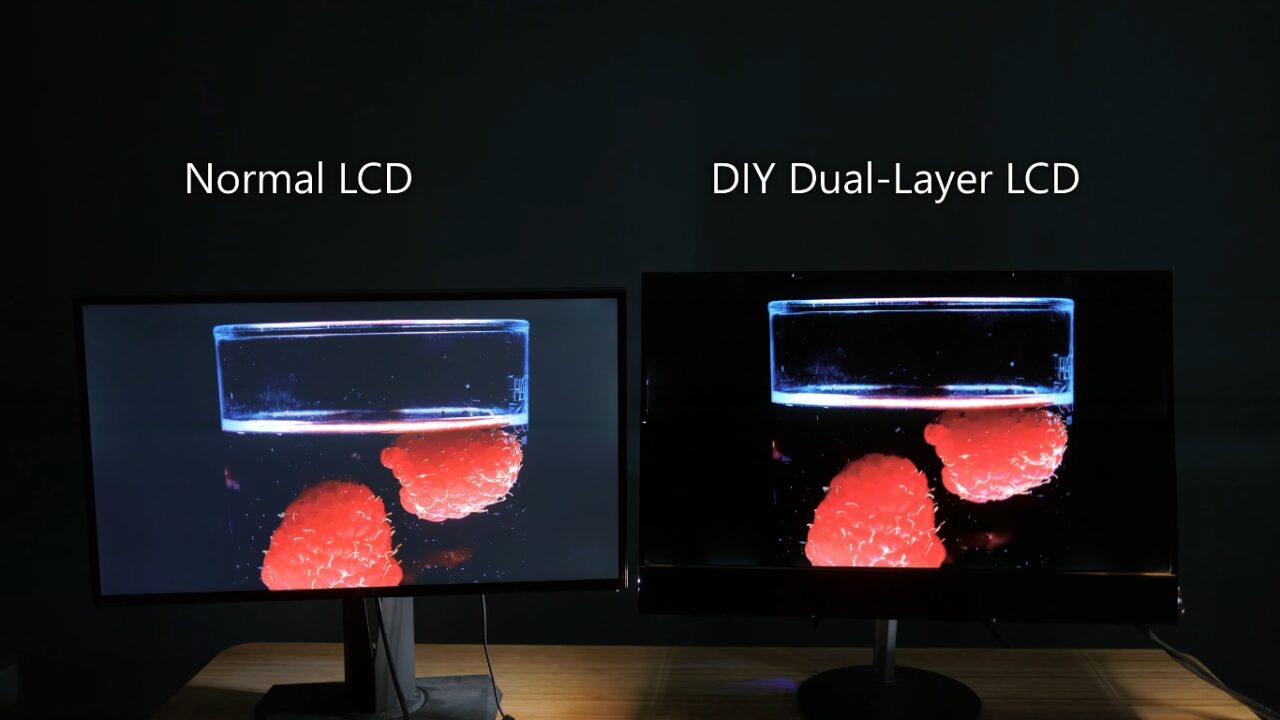
The move away from CRT monitors and toward LCD technology brought many benefits… but it also created new problems. One of them is that black isn't truly black, and we have to settle for a dark gray that ends up "washing out" all images. OLED monitors promise to fix that, but their prices are outrageous these days. However, Matt from the DIY Perks channel decided to explore another option: building a dual-layer LCD monitor.
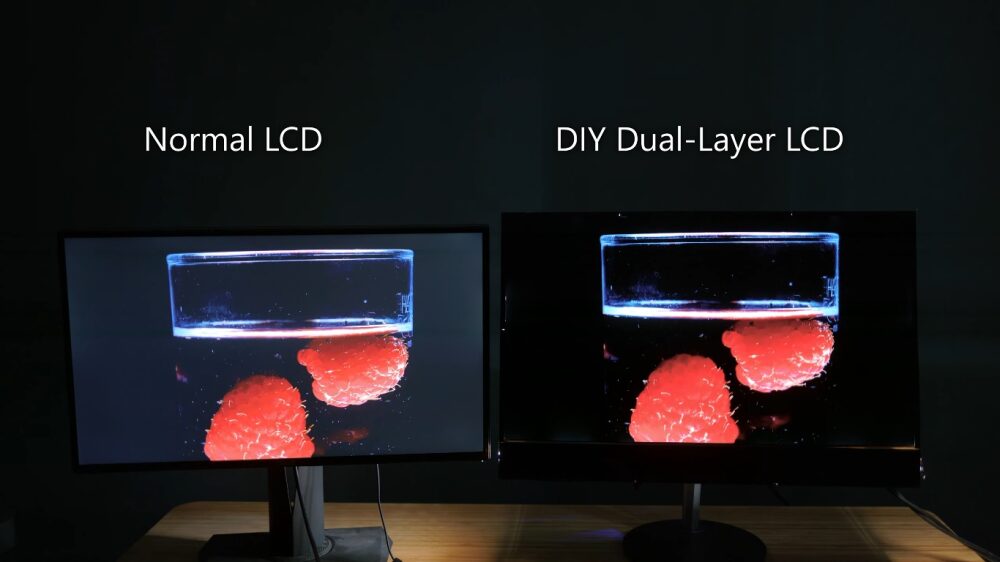
The backlight system is essential in every modern monitor and TV, but at the same time it’s one of our main adversaries. Why? Because when reproducing black images or high-contrast scenes, the panel cannot completely block the backlight, and we always get a slight leak or light bleeding.
OLED technology promises to end the tyranny of the backlight and its non-black blacks… but the prices aren’t helping. An LG UltraGear panel hovers around 1,200 euros, and it’s very hard to justify such an investment right now. So, what alternatives do we have? Matt from the DIY Perks channel offers us one: building a dual-layer LCD monitor and creating a sort of "false OLED" with better contrast.
A Dual-Layer LCD Monitor to Optimize Contrast
The process starts by disassembling two identical monitors: there can be no variables here, so they need to be the same model and size. Separating the panels from their mounts is a delicate action that requires a lot of patience, but it’s definitely within our reach. The first serious problem arises when placing one panel over the other: the polarization layers interfere with each other and block all light, resulting in a black screen. The solution is to place something like tracing paper between the two panels.
The second challenge is optimizing brightness, since the extra panel blocks more light. Matt decided to take a brute-force approach here, creating a more powerful backlight. The tracing paper comes back into play as a diffuser, but it must be installed at a specific distance. The rest is a matter of creating a new housing for both panels, all their electronics, and the power supply.
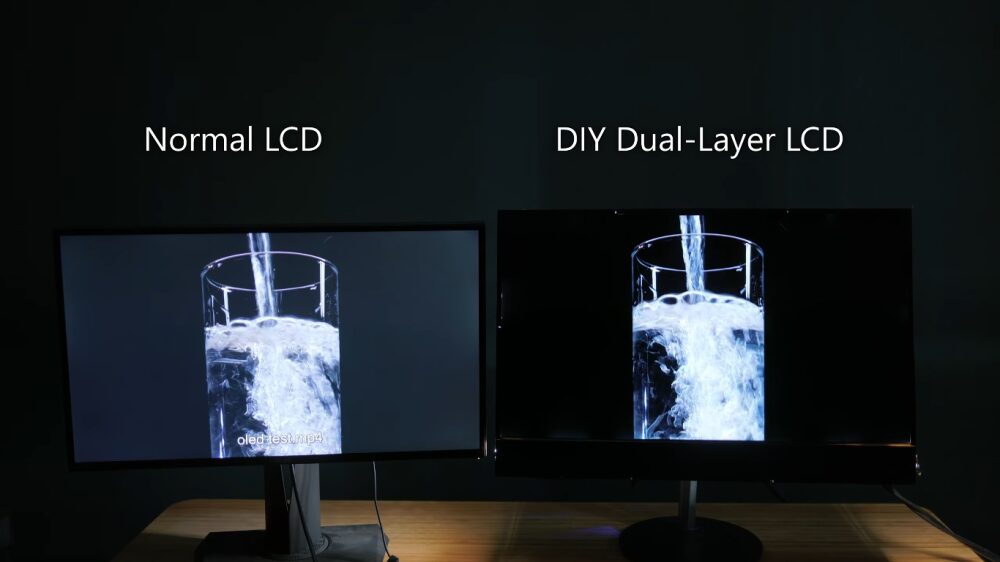
The final result is a monitor with much deeper contrast and vibrant colors produced by both panels. Games are Matt’s priority in this project, but video playback doesn’t look bad either. The most important weak point of such a setup (besides tearing apart two monitors) is power consumption: his new backlight devours 250 watts.


