
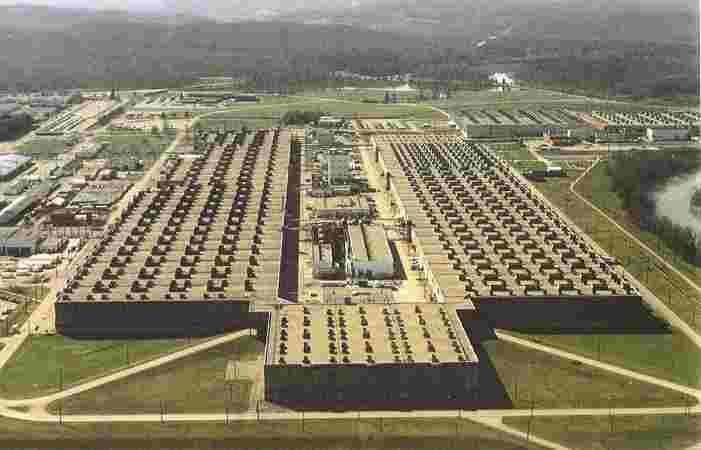
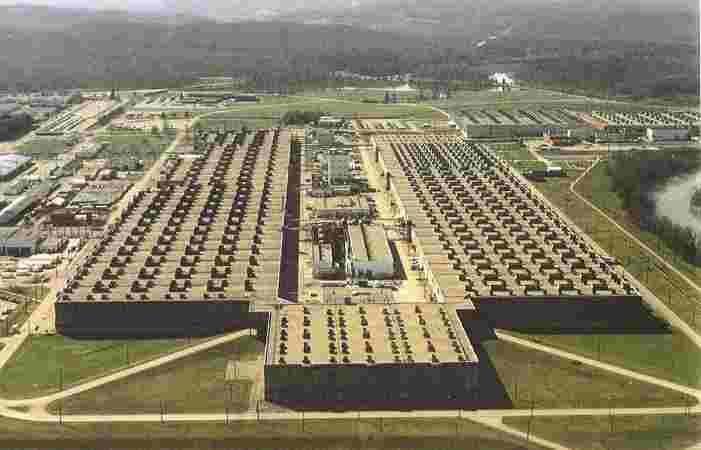
Visiting the facilities used to develop the first nuclear bomb, one cannot help but feel a sense of dread at what was achieved. The Manhattan Project—the code name assigned to this development—took place in the context of a desperate and bitter war, which for some justifies its existence. A monster was unleashed that, despite hiding its claws at the end of the Cold War, will always haunt humanity from the shadows. Today we show you the guts of the Manhattan Project, the site where the atomic monster broke its chains.
The Manhattan Project was the code name for a scientific development carried out jointly by the United States, the United Kingdom, and Canada during the Second World War. The ultimate goal was, of course, to develop a nuclear bomb before Germany.
The Manhattan Project
The exact origin of the code name is unknown, but most historians agree that it was attributed to the laboratory director, physicist Julius Robert Oppenheimer, as a reference to the poetry of John Donne. The project brought together a large number of scientific luminaries from almost all branches of science. The team, composed of physicists, chemists, and computer scientists, was led by Oppenheimer, and military security was in charge of General Leslie Richard Groves. Although work was carried out at several sites, most of the project took place at the Manhattan Engineering District, situated in what is now known as Los Alamos National Laboratory.
By the late 1930s, it was known that enormous amounts of energy could be obtained from nuclear reactions. In fact, experiments carried out in Germany (before the war) had shown that atomic fission was possible and that the regime was working to achieve it. Since January 1939, a small group of scientists from Columbia, Princeton, and California universities worked hard to determine whether atomic fission in a chain—that is, once initiated, the energy generated by itself would be enough to keep it going—was viable. After three years, the result was announced: a fission chain reaction was viable. The atomic bomb was, at least in theory, possible.
It was not until one day before the Japanese attack on Pearl Harbor in December 1941, when the United States officially entered World War II, that the S-1 Committee was created with the aim of guiding research to build an atomic bomb before the Germans. From January 1942, the Manhattan Project focused on designing factories to produce fission material in sufficient quantities to achieve its goal. Large-scale operations related to the project were assigned to the army by President Roosevelt, and the Army Corps of Engineers designated Colonel James Marshall to supervise the construction of factories for uranium isotope separation and plutonium production.
At that time, the only method that seemed promising for large-scale separation was electromagnetic separation, developed by Ernest Lawrence at the Radiation Laboratory of the University of California. However, scientists continued to study other alternative methods due to its high cost and the improbability of producing enough material before the end of the war. Since it was not exactly known what type of process would be needed to obtain this material, three different production methods were implemented simultaneously. After two years of work, pilot plants produced a few grams of fission material.
From January 1944 to July 1945, full-scale production plants remained in operation, producing the material needed to make three atomic bombs. It was by no means an easy task. The war effort consumed all the country's resources, and even steel was hard to come by for building the facilities.
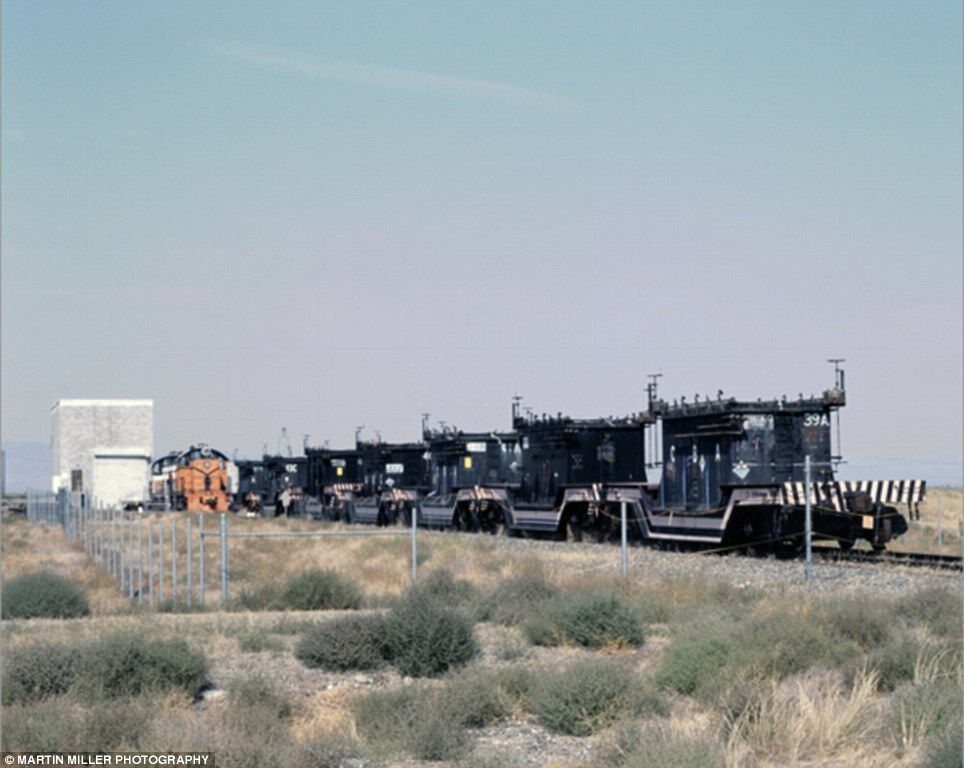
Some mass spectrometers, called Calutrons, were used to separate uranium isotopes. These machines, developed by Ernest Lawrence, were similar to cyclotrons. They operated at the Oak Ridge plant in Tennessee. They were used for the industrial-scale enrichment of uranium needed to build the Little Boy atomic bomb, which would be dropped on Hiroshima in 1945.
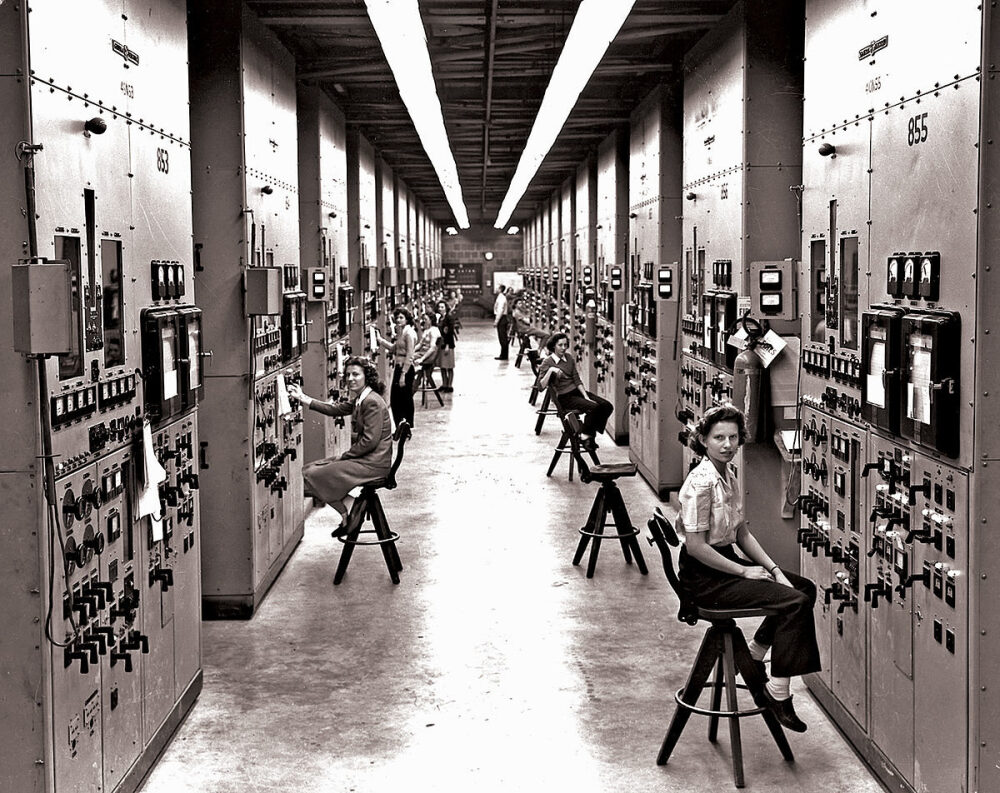
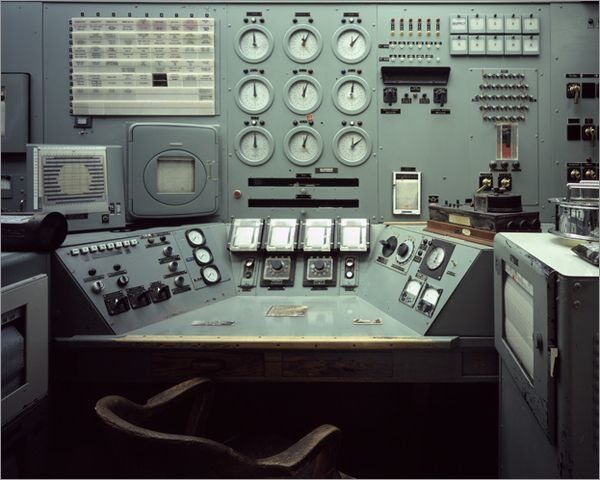
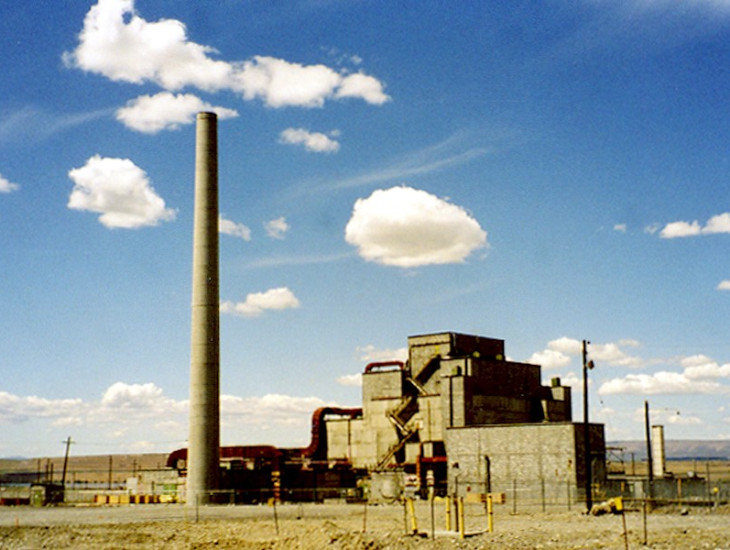
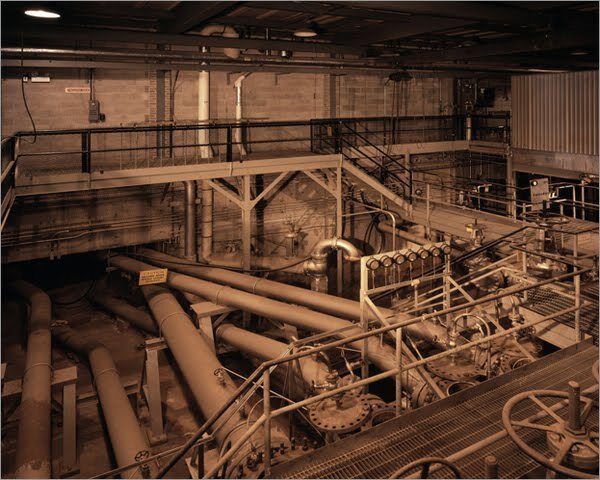
All that radioactive material had to be stored somewhere, and Benton County was chosen for it. The Hanford Nuclear Reservation is a stretch of land covering 1,518 square kilometers, equipped with suitable storage for what would be the raw material of the first atomic bombs. The former towns of White Bluffs and Handford were completely evacuated to get more space for military operations. All that remains of such an effort are the ruins you see in these photographs.
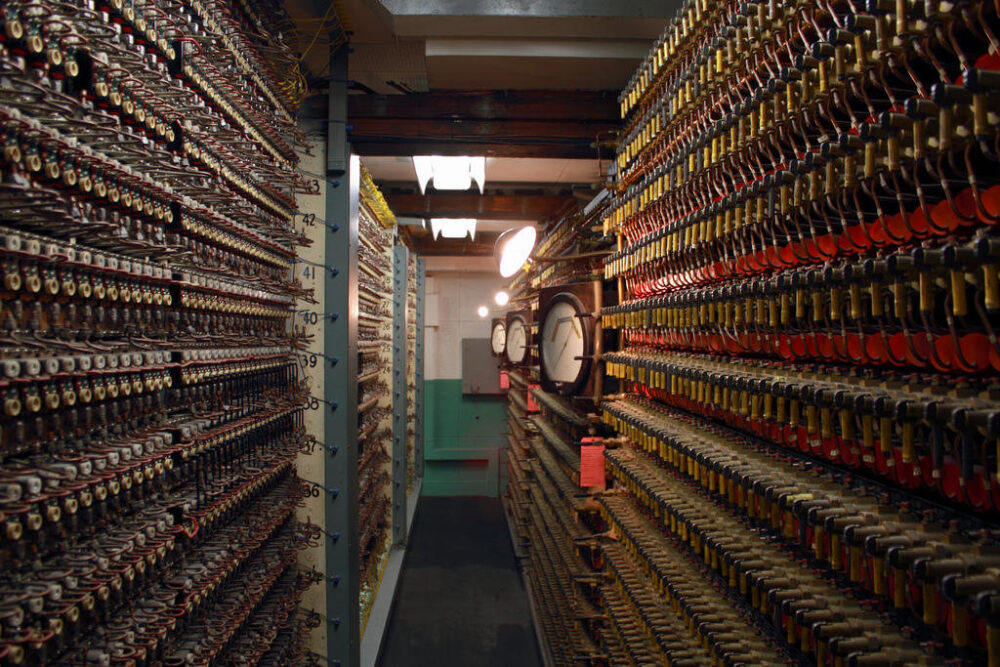
The first successful atomic test, the detonation of a device nicknamed 'Trinity', took place in the Alamogordo desert, New Mexico. On May 7, instruments were calibrated to analyze the behavior of the first atomic bomb by exploding 100,000 kilograms of TNT. On July 16, 1945, at 05:29:45 local time, the device exploded with an energy equivalent to 19 kilotons of TNT. It had been placed on a 20-meter-high metal tower and left a crater three meters deep and 330 meters in diameter.
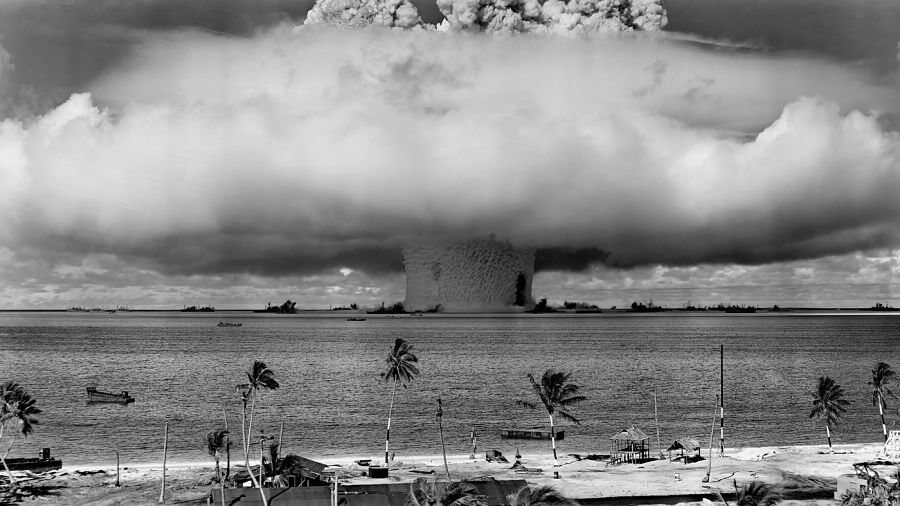
According to witnesses, at the moment of the explosion the surrounding mountains were illuminated for a couple of seconds. Forty seconds later the roar of the detonation reached them. The shock wave could be felt 160 kilometers away, and the mushroom cloud reached 12 kilometers in height. Technically, Trinity was a 'Bomb-A', a plutonium-based nuclear weapon. Today, at that site there is a black conical monolith, formed from silicon resulting from the fusion of sand by the heat of the explosion. In the United States arsenal, two nuclear bombs ('Little Boy' and 'Fat Man') remained ready to detonate. The sword of Damocles had just been hung over the neck of humanity.
A couple of weeks later, Hiroshima and Nagasaki would become the first two cities—and the only ones—to experience firsthand the power of the monster unleashed through the Manhattan Project.
https://old.neoteo.com/strategic-defense-initiative-la-guerra-de-las-5567/


