
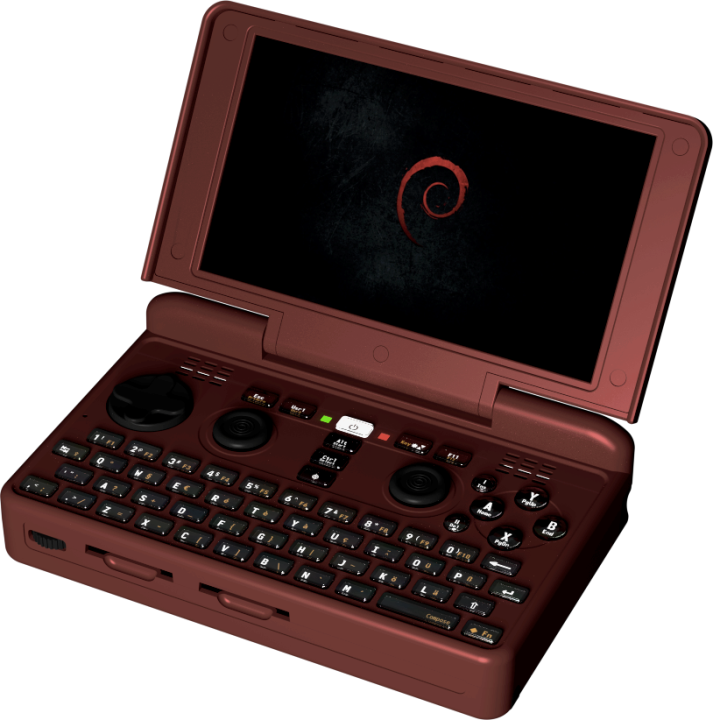
Remember Pandora? Its formal market debut was during 2010, and although its development faced multiple problems, it demonstrated that launching an open source console is not impossible. Now, Pandora has a kind of heir with the project DragonBox Pyra, which raises its profile to that of a "pocket computer" with an integrated keyboard and 2 GB of RAM.
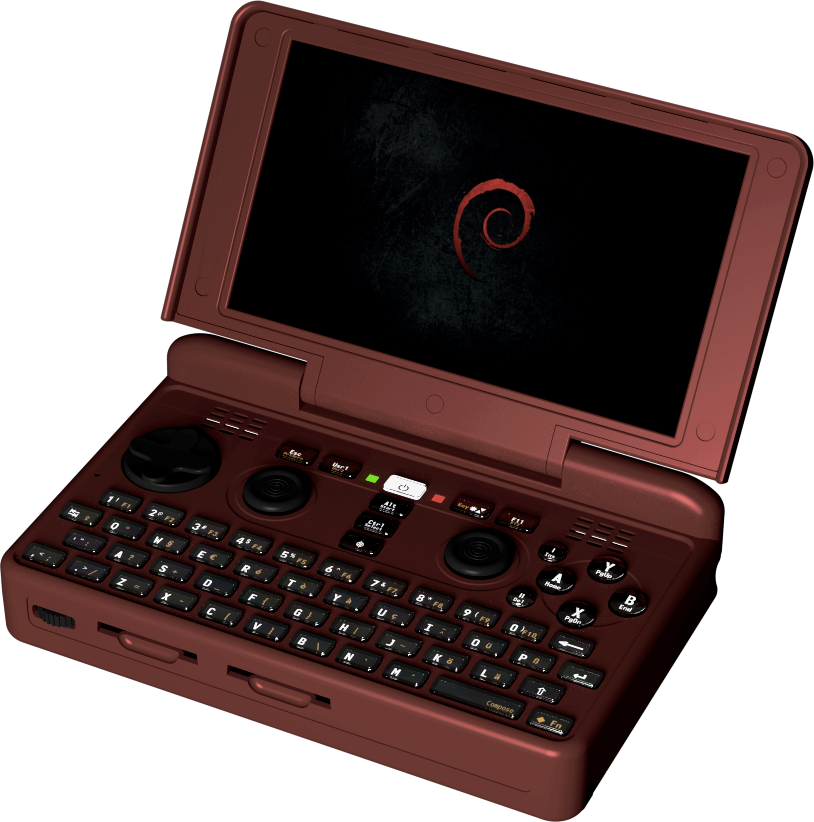
There are several reasons why we can call a smartphone a "pocket computer". All the basic functions are there, with the difference that they run under a more specialized environment, and why not, closed. Now, the original idea of "pocket computer" reminds us of devices like the old Nokia Communicator, or the Sony Vaio VGN-P50 (and its variants). The presence of a physical keyboard is inevitable, but it gives the feeling that nobody wants that these days. Still, we can always find an independent development willing to cover the demands of a small group of users, and that is how we come across DragonBox Pyra. This project is the successor to the open source Pandora console, and it borrows some of its most relevant features.
What you see in the video is just a prototype without software optimizations (the reason the video performance is so low), although its main hardware parameters are already known: a Texas Instruments OMAP5432 dual-core at 1.5 GHz, 2 GB of RAM, a five-inch touchscreen with 720p resolution, three memory card slots (one of them internal), WiFi n and Bluetooth connectivity, three USB ports (one of them OTG), a micro HDMI port to add an external monitor, an optional 3G/4G module, and a 6,000 mAh battery.
Although there are reasons to be excited about the DragonBox Pyra, there are details in its development line that raise several questions. First, the decision of its creators to choose the OMAP5432 is very striking (I imagine a documentation matter) because it is a SoC without official support, since Texas Instruments left the market in September 2012. And second, we come to the price. We have always known that low-volume open source projects running parallel to the traditional market carry a certain premium, and as far as the DragonBox Pyra is concerned, it is 1,400 euros for the first 18 prototypes... or should I say "was", because they are already sold out. In short: the Pyra has several sharp edges to smooth out, but we will logically follow it closely.


