
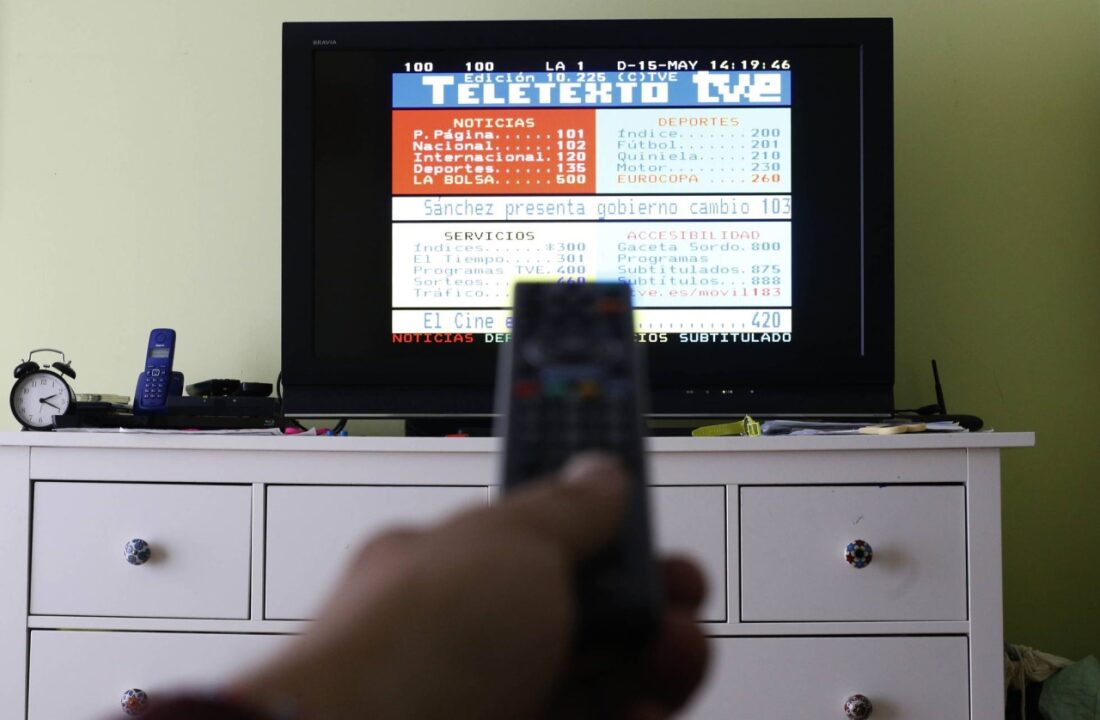
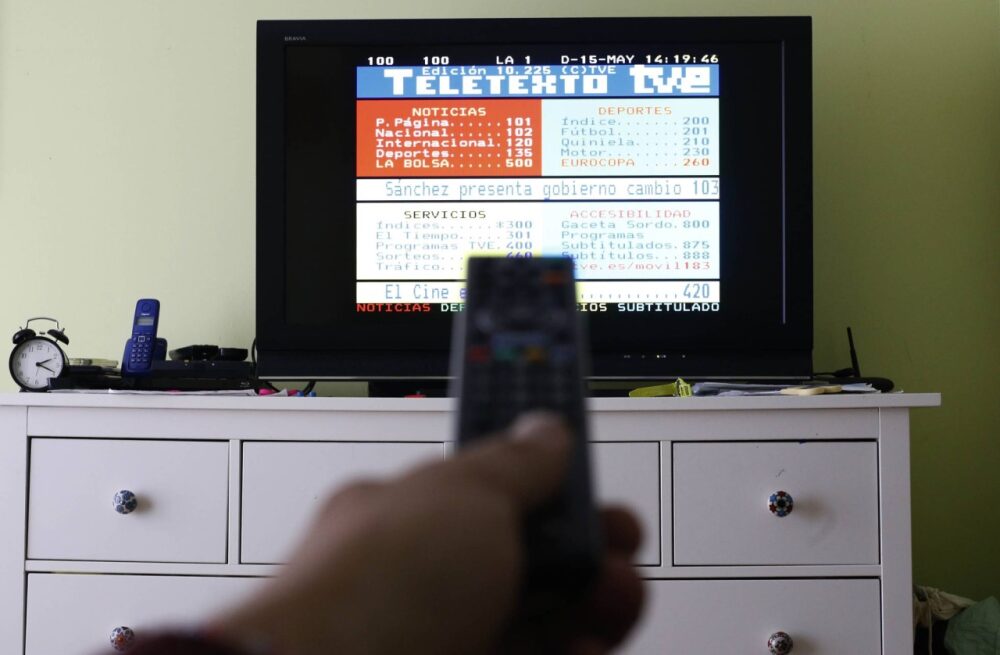
Without a doubt, television has been a revolutionary technology as a source of news and entertainment. But over the years, it went beyond images and introduced alternative communication methods that benefited (and still benefit) millions of people. One of those methods is teletext, whose origins date back to the 1970s. Spain is one of the few countries that still maintains teletext services, and as if that were not enough, accessing them via the Web is very simple.
CEEFAX: The Father of Teletext
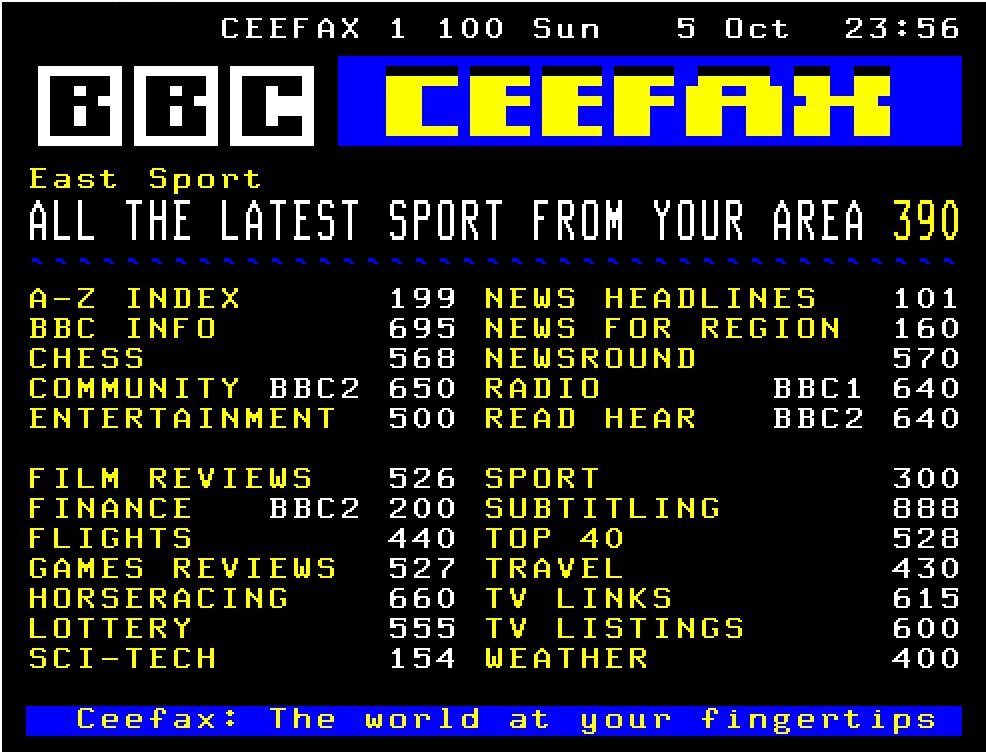
History reveals that teletext took its first steps thanks to a prototype developed by engineer John Adams in 1971. Shortly after, the BBC adopted his design and turned it into CEEFAX, the first service of its kind on the planet. CEEFAX worked smoothly for almost four decades until its retirement in 2012, and if you want to see the historic moment of its shutdown, we have a complete article for you.
Almost all of CEEFAX's functions were absorbed by the famous Red Button service. The BBC tried to retire it in January 2020 (citing "budget cuts"), but public protests multiplied, and the network had no choice but to recalibrate its priorities. The reasons are the same ones that, in a way, sustain teletext today: Older adults, deaf people and people with other disabilities have adapted very well to the service and its retirement could be detrimental. At the same time, part of the public prefers a more convenient way to read news in "snack" format, without having to go online or listen to a dense presenter.
Teletext in Spain
Of course, many countries decided to shut down teletext anyway (and beyond any claims), but Spain is the exception. TVE, La Sexta and Antena 3 share the content of their teletext systems on the Web:
Teletext TVE
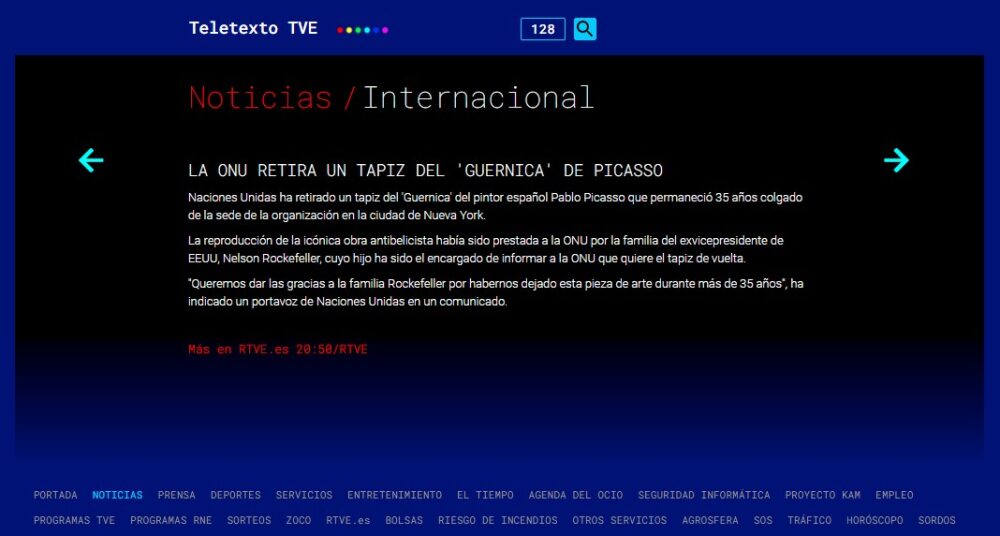
Probably the best adapted to current technologies, thanks to a polished interface and additional navigation controls. Clicking on the number or the title of the entry has the same effect, and from a certain point of view, it feels like a modern BBS.
Teletext Antena 3
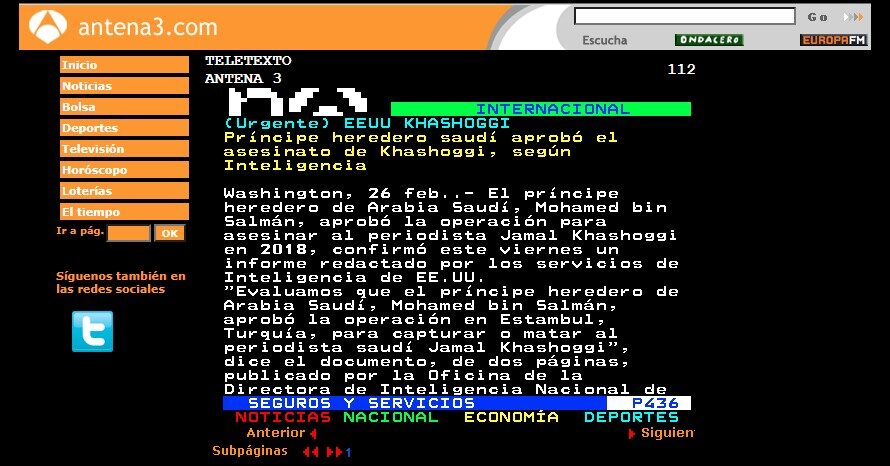
The word you're looking for is 'classic'. Large letters and bright colors immediately remind us of original teletext designs, and a partial logo in the top corner is a must. Sometimes it takes a while to load, but it works.
Teletext La Sexta
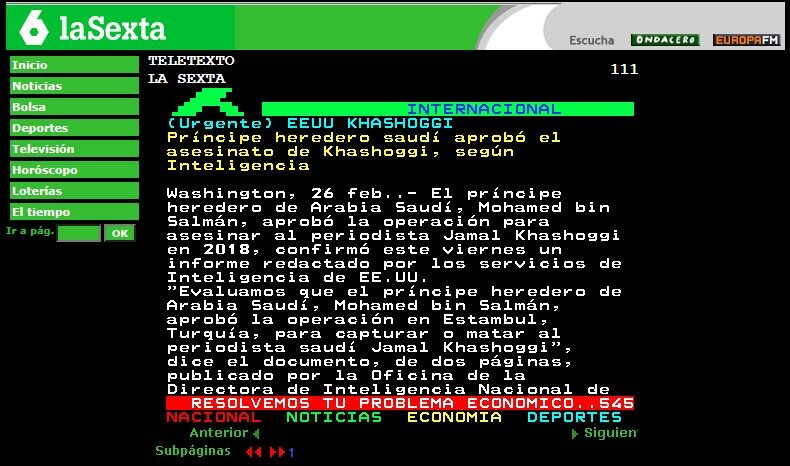
Personally, I don't know if it's a clone of Antena 3's teletext, or the other way around. Logical, considering that Antena 3 and La Sexta are sister channels under Atresmedia. Same font, same colors, same news... although it usually loads faster.
In Summary
How much longer will teletext last in Spain? Honestly, we have no idea. But the presence of advertising (with some emphasis on cable and fiber services) suggests there is still an audience on the other side. Another format, another style, another rhythm. In these times of hyperconnectivity and real-time notifications, perhaps teletext has more to offer than we imagine.


