
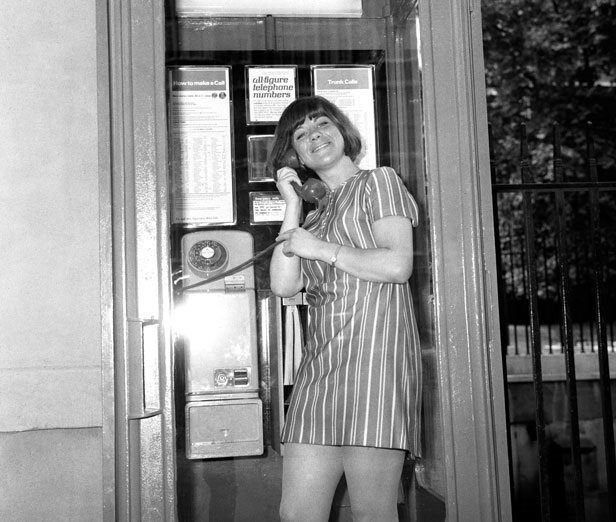
Listening to music has never been simpler. You can open Spotify, stream entire playlists on YouTube, or use any number of dedicated services with different profiles and prices. But in the 1960s, you had to be a bit more creative. Across England, people began using the Dial-a-Disc service, which offered a popular song each day to anyone who called by telephone.

The General Post Office operated several telephone information services in the mid-1960s, including the official time, weather reports, and cricket scores. The cricket service only ran during the official season, from May to August, leaving a good portion of the (very expensive) infrastructure unused for eight months. The answer to occupy that “time” and make use of resources was Dial-a-Disc, a musical platform that debuted in the city of Leeds on July 7, 1966. The trial itself lasted less than a month, but its reception was good enough to merit a second evaluation in December, and over the next four years it spread to the rest of the country.

How It Worked
To use the service, all a person had to do was pick up the receiver and dial “16” or “160”. After a brief message and a tone, the song programmed for that day would begin, repeating over and over.
Dial-a-Disc's availability matched the reduced-rate telephone hours, that is, from 6 PM to 6 AM Monday through Saturday, and 24 hours on Sunday. Initially it was limited to the seven most popular songs of the moment, but later it was extended to eight (two songs on Sunday), and in its complete version it even included the Top 20.

Quirks and Challenges
Dial-a-Disc could not escape the quirks of telephone service in those days: frying noise, mono sound, the voices of some people on the line, young people occupying public payphones for hours, and hackers (who constantly tried to listen to music for free) were inevitable.
Peak and Retirement
However, that became part of its charm. In the mid-70s, Dial-a-Disc received an average of 70 million calls per year, but it reached its peak in 1981, with 200 million calls that year. A true pioneer of music distribution, directly to the public and legal, I might add, Dial-a-Disc was retired in 1991, after having transmitted its magic through copper for 25 years.
Source: RetroScoop


