Ink in printer cartridges, like the charge in our batteries, always seems to run out at the worst moment: when we need it most. Yet we've known for a while that some manufacturers' practices are more than dubious. With that in mind, we arrive at a critical question: are empty cartridges truly empty? The people at Bellevue Fine Art decided to find out with the cartridges of their Epson 9900 printer...

There's been talk about the delicate relationship between consumers and printer manufacturers... and if the debate continues, it's because things haven't improved at all. Printers are as disposable as ever, driver issues are the order of the day, and the price of ink is comparable to that of unicorn blood packed in gold bottles.
For many, the solution lies in adopting a refill policy for cartridges and toners, or directly acquiring systems that shift the ink load to external tanks. Then there are those who manage to reduce or eliminate paper consumption, nipping the printer problem in the bud. But it's also true that not everyone can take these shortcuts, such as the professional printing company Bellevue Fine Art.
To carry out its work, this company uses an Epson 9900 printer, a tank nearly two meters wide and weighing 115 kilograms. The printer's price hovers around five thousand dollars, while the set of 700-milliliter cartridges costs on average $3,800. Needless to say, ink for such a monster busts budgets, but there's another drawback: the printer lies. When the hardware reports ink level below 1 percent, it simply refuses to continue printing until a new cartridge is installed.
Out of pure curiosity, the folks at Bellevue Fine Art decided to open some of their supposedly empty cartridges on their own, and they discovered what we all suspected: each 700-milliliter 'empty' cartridge can contain between 100 and 150 milliliters remaining, that is, between 14 and 21 percent of its content. The same happens with the 350-milliliter versions, which, when the printer rejects them as empty, still hold 60–80 milliliters of ink.
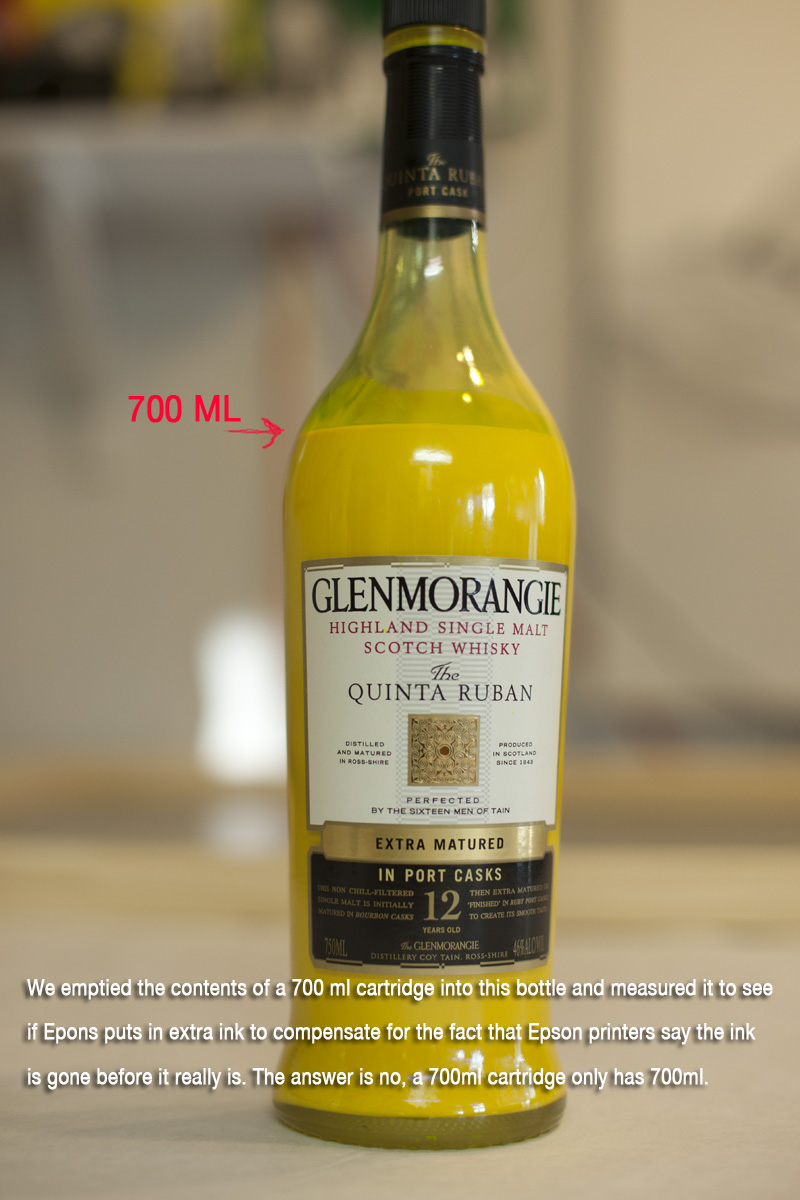
In other words, companies like Bellevue Fine Art are forced to throw away thousands of dollars in ink they already paid for, and that for some reason the printer doesn't use. If this were due to a technical limitation, the logical thing would be for Epson to add extra ink to compensate for the loss, but that's not the case: the cartridges have exactly 700 milliliters.
Put another way, you pay for 700 to use 550. Bellevue Fine Art tried to contact Epson several times looking for a solution, but the company's position was always the same: ignore the messages or say they are wrong. Well... a YouTube video is worth more than a thousand images these days...
https://old.neoteo.com/el-fraude-de-los-cartuchos-de-tinta-una-maquina-de-imprimir-dinero/Source: Ars Technica