
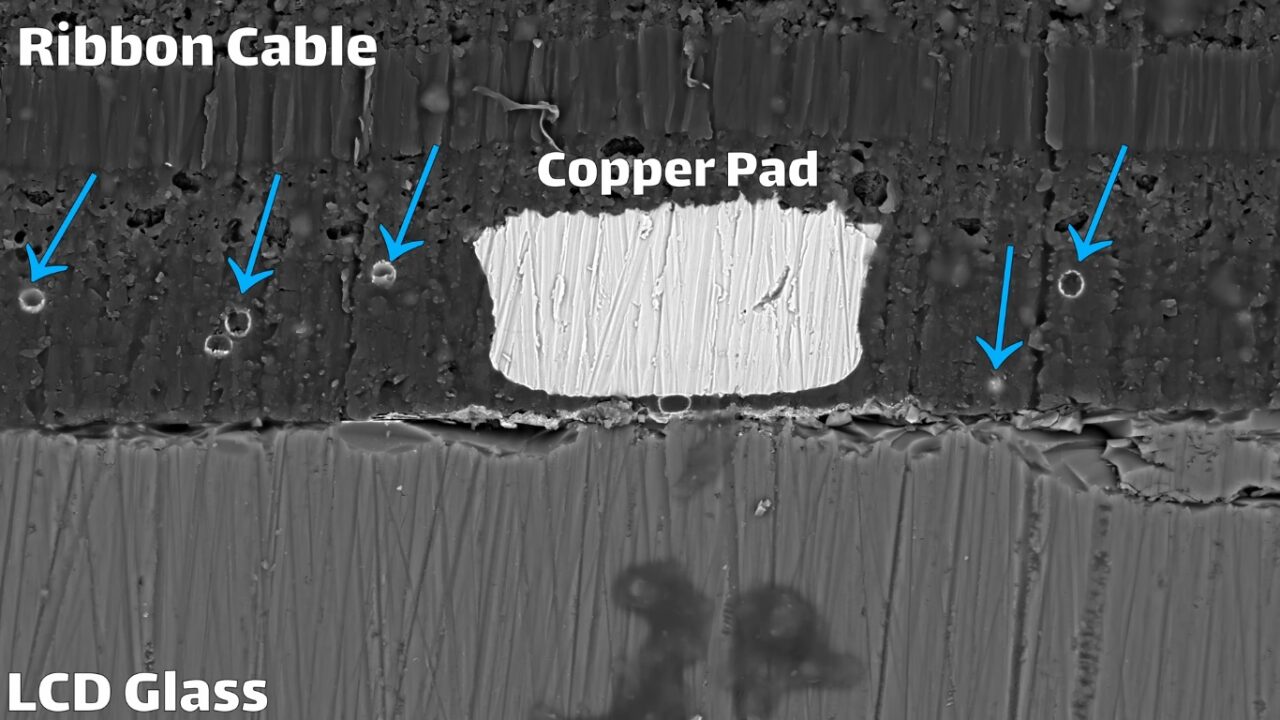
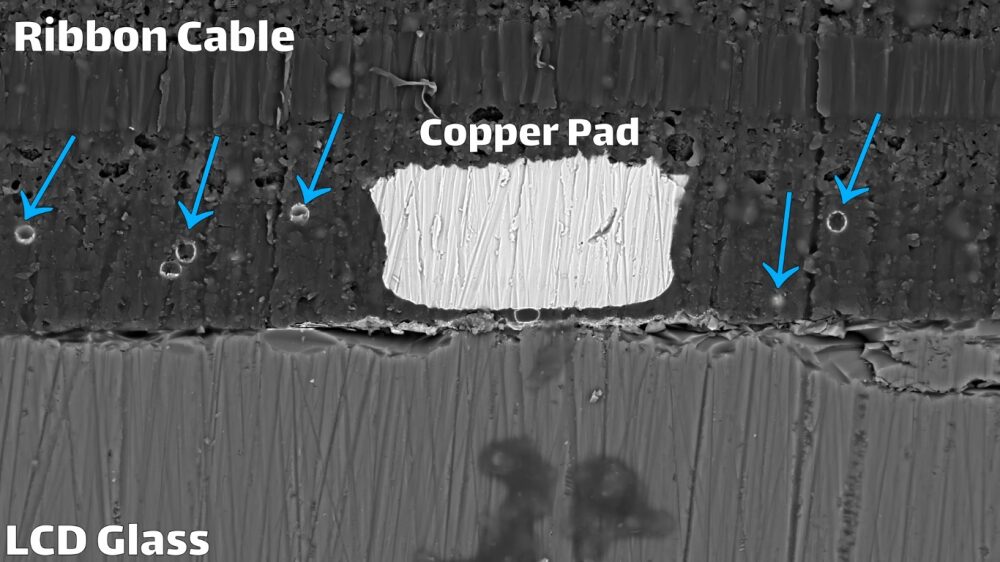
When you need to make an electrical connection, you have several options, from classic hand-made bridges to tin soldering and the endless universe of terminals. However, there are situations where none of those solutions are viable, and one of the most important is connecting LCD screens. That's where the so-called anisotropic conductive tape, better known as "ACF tape" in electronics and repair circles, comes into play. Would you like to know how it works?
If you've ever opened a calculator, an air conditioning remote, or any other compact product with a built-in LCD screen, you've probably found a curious piece of rubber near the module. It's an elastomeric connector, also called a zebra connector, which alternates conductive and insulating regions, allowing electricity to conduct in one specific direction. Ten years ago, Mr. ModemHead repaired his Fluke multimeter and shared an excellent image of a zebra connector:
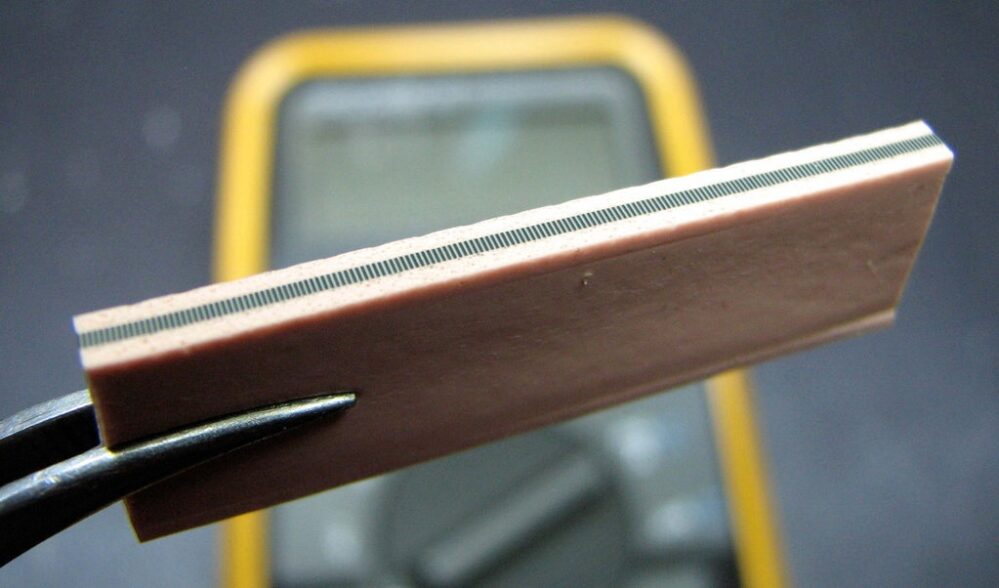
However, some devices are so compact that using one of those connectors is impossible. That job falls to the anisotropic conductive tape, much more popular under the name "ACF tape". Why "anisotropic"? Because it only conducts electricity in one direction, specifically the Z axis of the tape. How does it achieve this? To find the answer, I recommend taking a look at one of the latest videos from the Breaking Taps channel. It's in English, but its visual content is not to be missed:
ACF Tape: A Story of Adhesive, Pressure, and... Balls?
As the video shows, traditional conductive tape isn't special. You can buy whole rolls of copper or aluminum without much effort, but it's not suitable for use on LCD screens because you'd create a giant short across all your contacts. Instead, the anisotropic conductive tape limits its action to the Z axis with the help of metallic micro-spheres suspended in the adhesive.
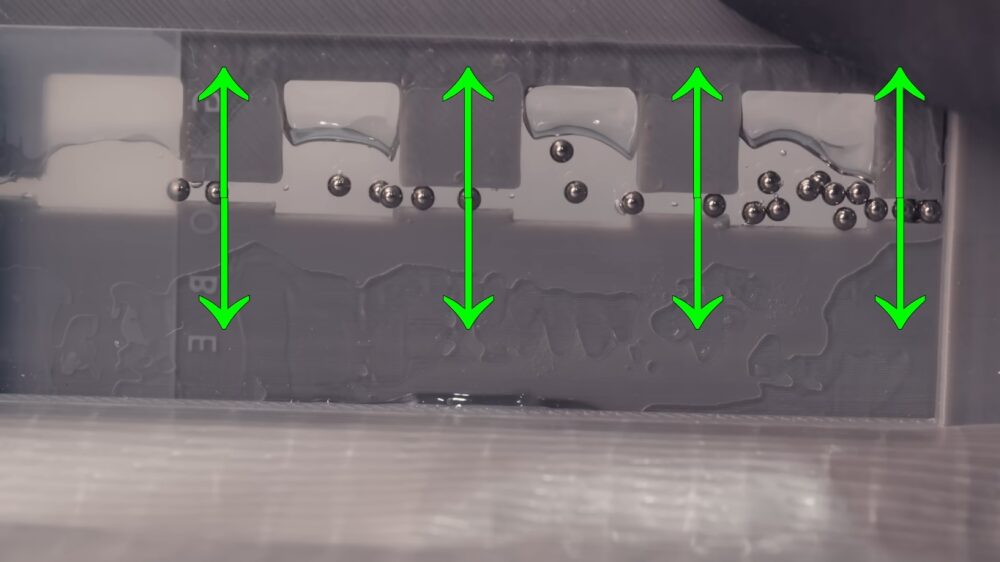
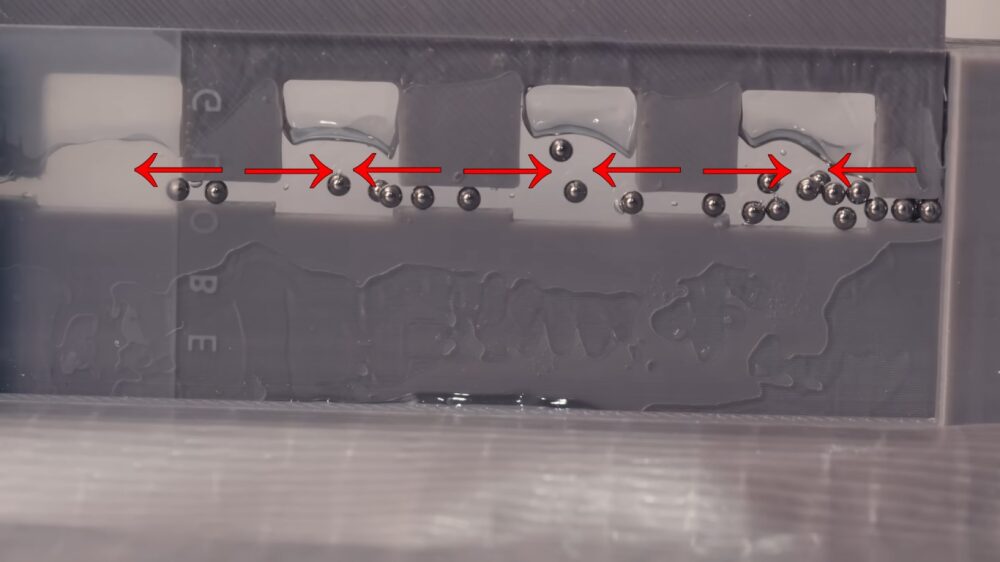
The large-scale demonstration by Breaking Taps is excellent: the gel takes on the role of adhesive, while the two plastic pieces represent the LCD panel and the flexible cable, or "COF" (Chip-on-Film), depending on the application. The steel balls are the micro-spheres, which get trapped between the connectors, forming a bridge between them vertically, but not laterally.
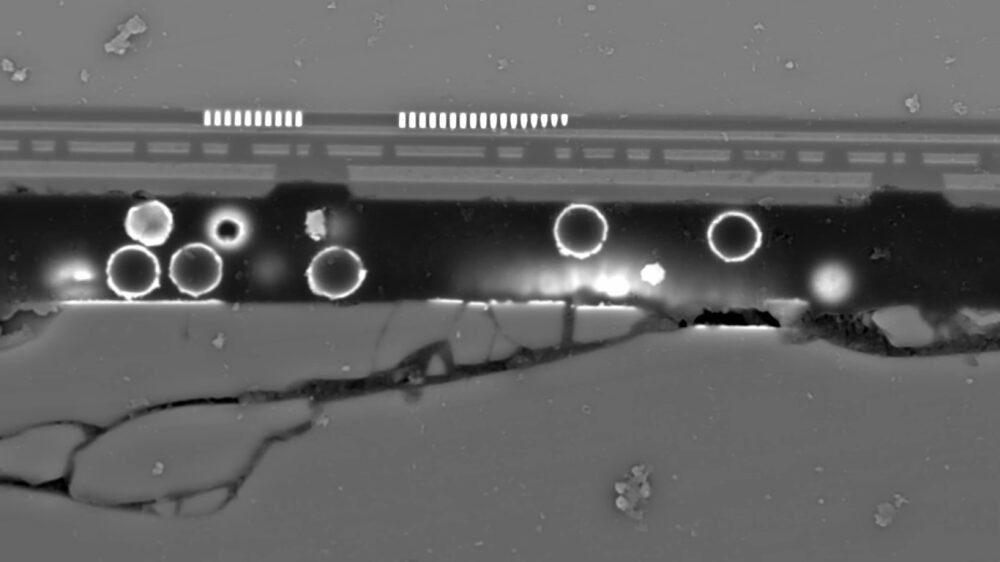
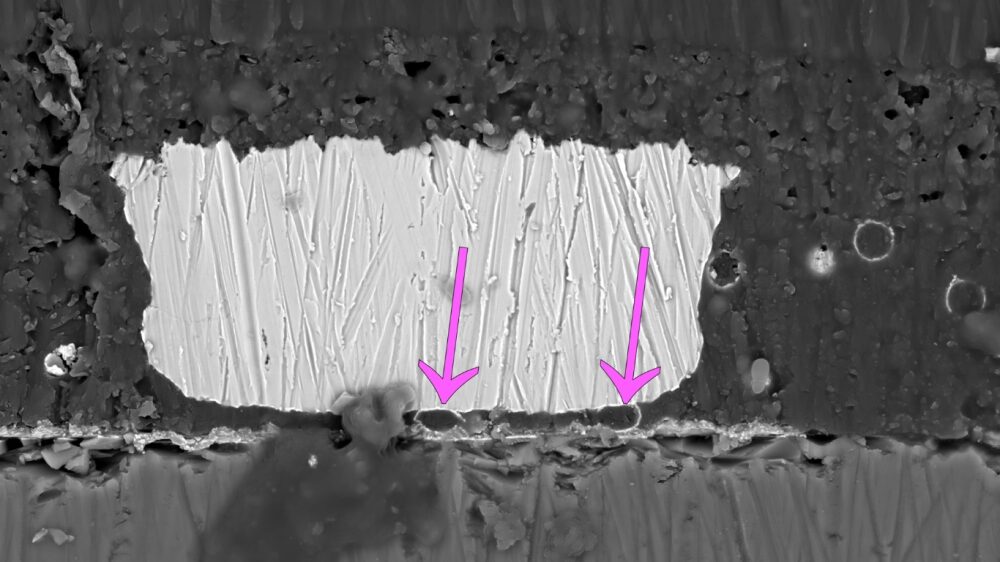
This in turn reveals two fundamental details: the anisotropic tape needs an appropriate amount of micro-spheres, and they must collapse under the connectors (they're designed that way) to improve conductivity. In the last images of the video we can see that contact can be good even without the intervention of the micro-spheres, but the tape serves as both a guarantee and a securing system at the same time. Now you know: next time one of your screens fails with vertical lines, it's because the balls aren't making contact.


