
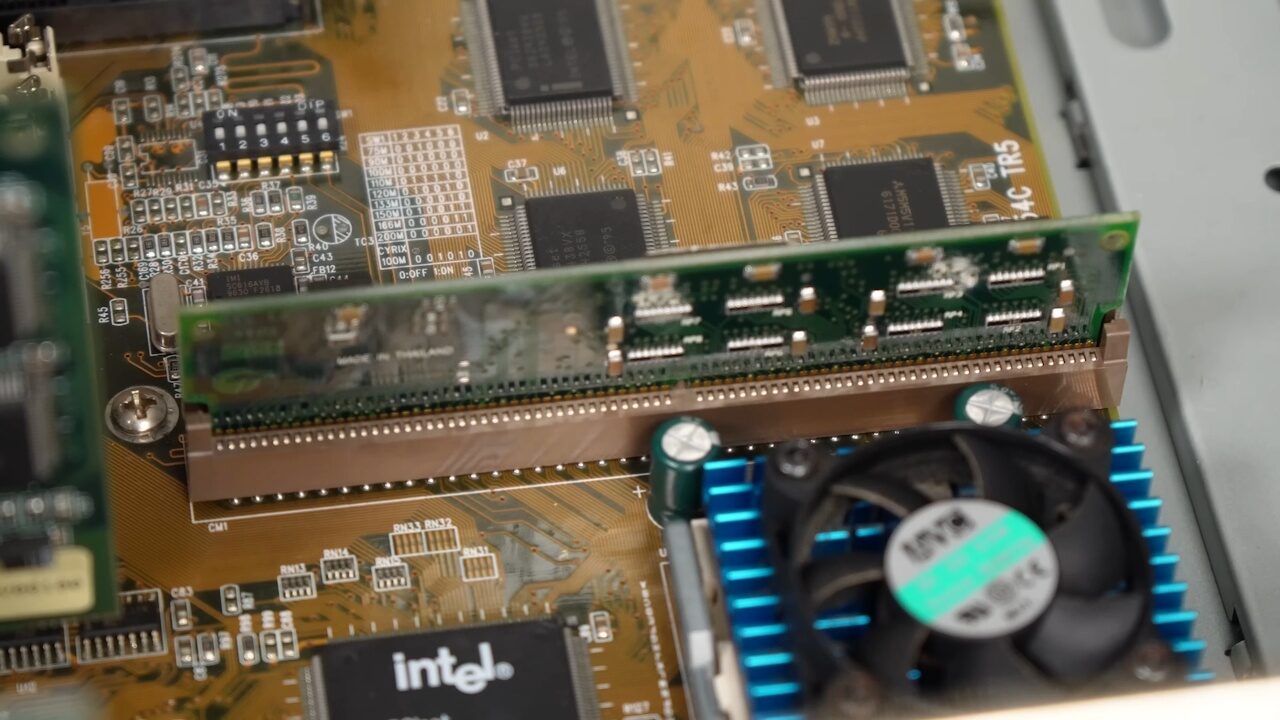
Unlike today, during the '90s you could not only use processors from three or four different manufacturers on the same socket, but you also had the option to expand other parts of a computer, most notably L2 cache memory. With the installation of COASt (Cache On A Stick) modules, a system without L2 could receive 256 or 512 extra kilobytes.
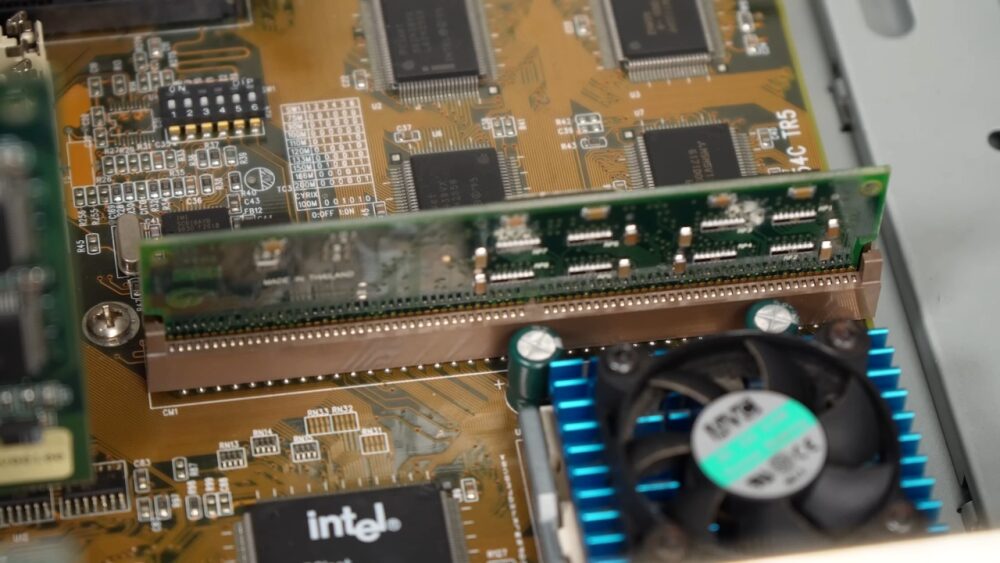
The Upgrade Era of 1996
In 1996, the first Quake told us it was time to leave our 486s behind. That same year, Tomb Raider and MechWarrior 2 (along with other games that received official patches) kicked off the era of 3D accelerators, and Windows 95 had already "retired" all 386s while setting a 4 MB minimum for RAM. The investments were painful, but worth it.
Processors, video, audio, accelerators, RAM, disk… what else could we upgrade? Not everyone remembers, but L2 cache memory was also an option. Thanks to the COASt (Cache On A Stick) specification, motherboard manufacturers could enable an L2 expansion path with 256 or 512 kilobyte modules. In fact, some models came without L2 cache — or worse, had fake chips on their PCB. Rees from the ctrl-alt-rees YouTube channel installed one of those COASt modules on his Pentium 100 and decided to run some tests.
Putting COASt to the Test
Rees's benchmarks are split into three phases: no L2 cache (technically disabled in the BIOS), with 256 kilobytes of integrated L2 on the motherboard, and expanded to 512 kilobytes with a COASt module. By far, the most important results appear when going from 0 to 256 KB: jumps of 17 percent in memory operations, and more than 50 percent in disk cache. On the gaming side, Doom improves between 11 and 13 percent, while Quake oscillates between 15.5 and 16.5 percent at 320x200 pixels.
However, when increasing L2 cache to 512 kilobytes with the COASt module, the gains are minimal. Some benchmarks even show regressive behavior, and the improvement in Doom doesn't exceed 2 percent. The only test that seems to take advantage of the COASt module is Quake, but even then we're talking about 3 percent.
From a certain point of view, this confirms everything we remembered about COASt modules: in addition to being very expensive and not universally compatible, the biggest benefit was for systems without L2 cache. As if that weren't enough, SRAM prices plummeted and CPU manufacturers ended up integrating L2 into their chips (think Pentium II/III and AMD K6-III)… but that's another story.


