
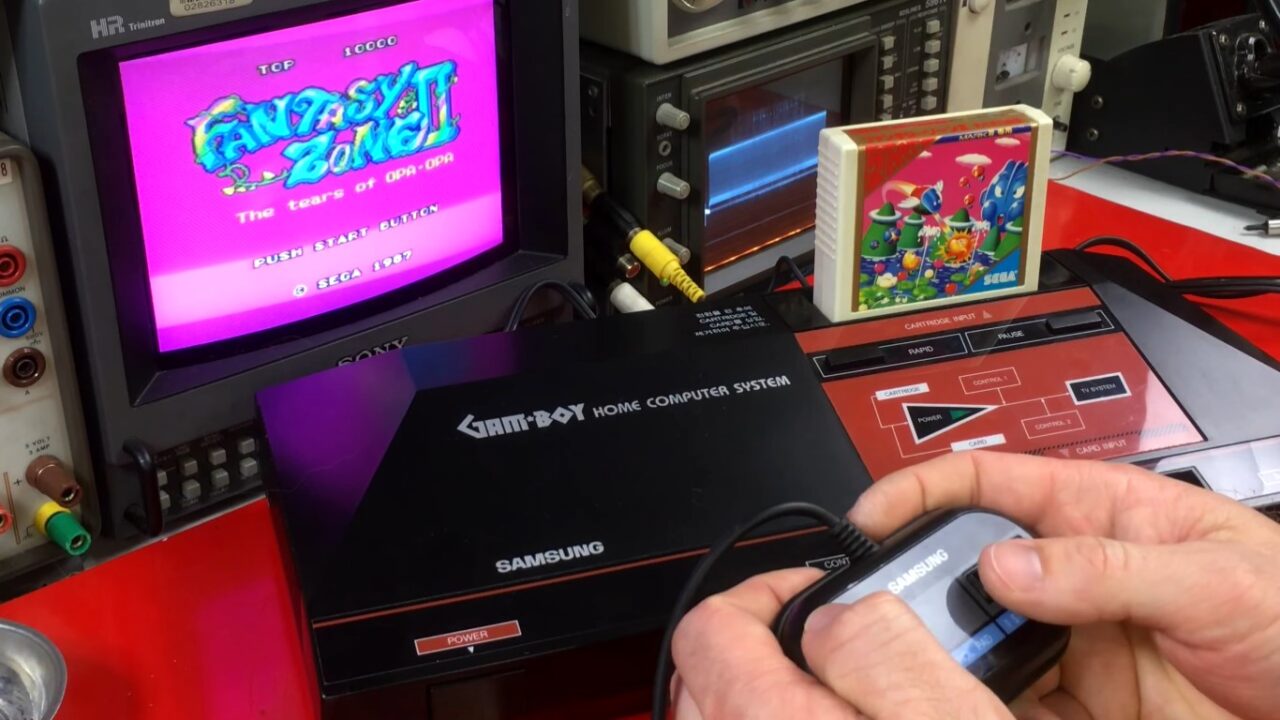
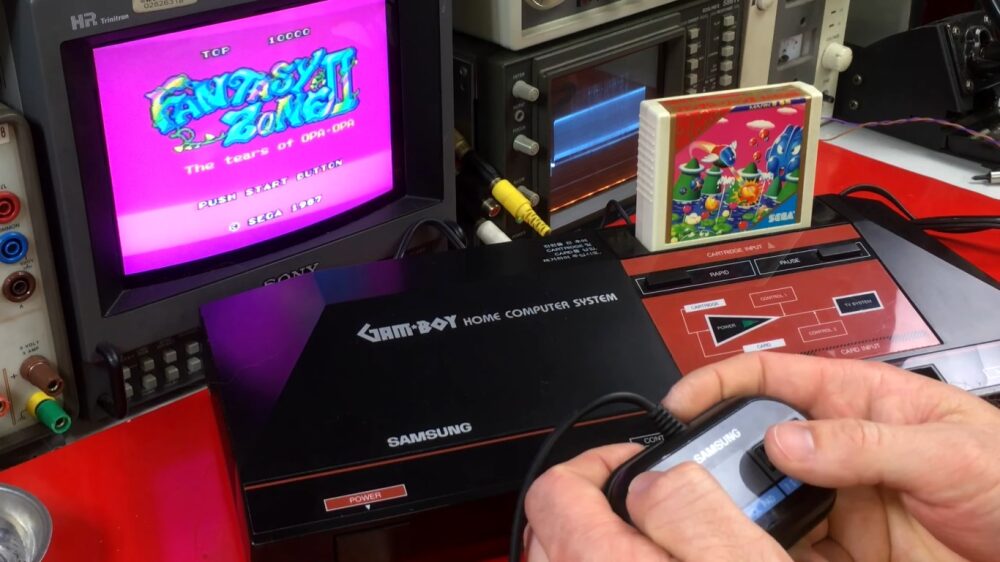
The history of computing and video games is full of unusual agreements. Our readers probably remember the famous Nintendo PlayStation, and we've also talked about the Sharp Nintendo Television, but today we discovered a curious “bridge” that the folks at Sega built with Samsung at the end of the 1980s. The first result of that union was the Samsung Gam*Boy, a clone of the classic Sega Master System, designed for the South Korean market.
Legend has it…
… that Japanese companies had great difficulty entering the South Korean market due to a series of trade restrictions dating back to the so-called “Law for the Punishment of Anti-National Actions”. That law was established immediately after Japan's surrender in World War II, censoring and prohibiting “cultural goods and articles”. imported from Japan.
Now, those trade restrictions were real, and were not revised until 1998, under the administration of Kim Dae-jung. However, that did not prevent the creation of subsidiaries or special agreements between Japanese and South Korean companies. A good example is Fujitsu, which entered South Korea under the name “FACOM Korea” in 1974, but today's story takes us to the curious alliance formed by Sega and Samsung. The Master System console had been on the market for a couple of years (first as an export model of the Sega Mark III, and then as the final product), and for a time it was under the responsibility of the company OACS (which essentially sold the Mark III in South Korea), but then it passed into the hands of Samsung, and the result was the Samsung Gam*Boy. No, it's not a joke.
Samsung Gam*Boy: The official Sega Master System clone in South Korea
At first glance, the console is nothing more than a “localized” edition of the Master System Model 1, with a very important difference: It uses Japanese cartridges (the international cartridge is larger), therefore its compatibility extends to all Japanese Master System, Sega Mark III, and Sega SG-1000 games. In fact, it also includes a slot to read “Sega Cards”, loaded with simple and inexpensive games. As the titles became larger and more complex, the idea of Sega Cards fell into obsolescence, and Sega removed the reader with the Master System II. To this is added a “3D Glasses” connector, but James from the James Channel explains that barely four games were made for that interface.
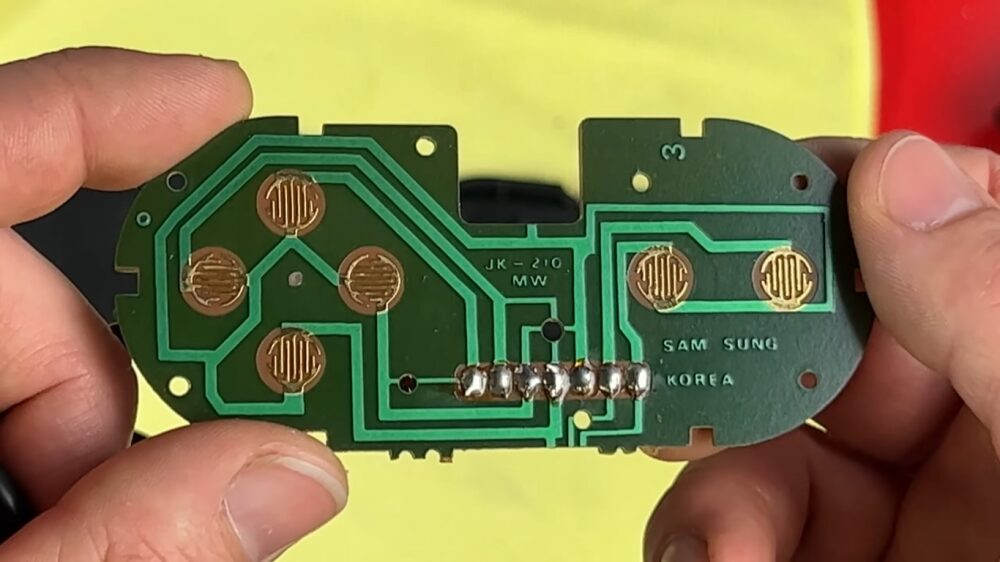
Another notable change in the design of the Samsung Gam*Boy is in the gamepads. The classic rectangular style of the gamepad on the Master System is hard to forget, but Samsung opted for a previous design, used in its SPC-1000 computer from 1983. James was forced to repair one of these gamepads, and in the process discovered that the PCB has a legend, “Sam Sung Korea”.
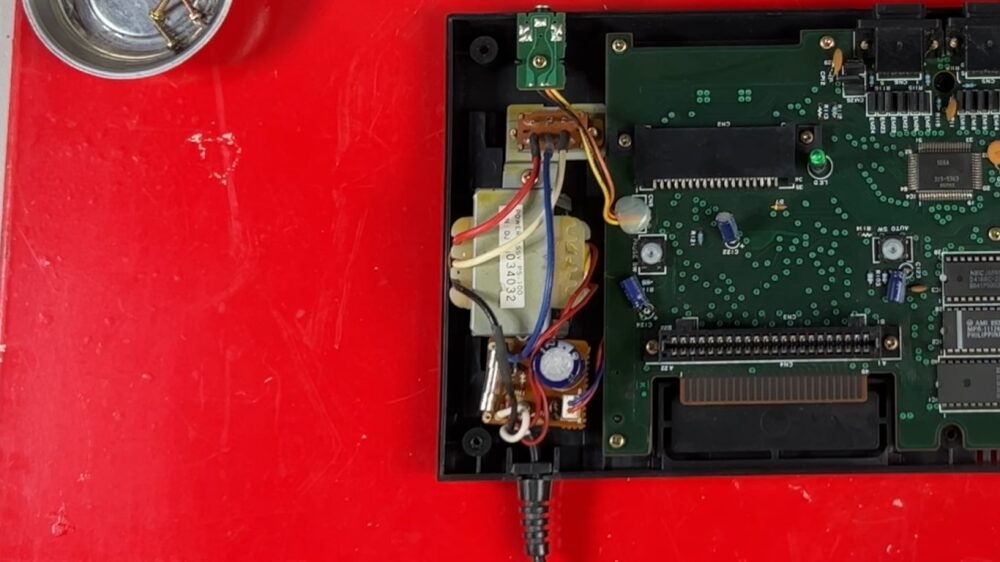
However, the story does not end there. First, the power supply is different, as it uses an internal transformer with a voltage selector. Then, the Japanese Master System stood out for the inclusion of an FM audio chip, but that hardware is not present in the Samsung Gam*Boy. Finally, James expected to see a Japanese PCB inside the console, and what he found is a design exclusive to the South Korean territory, with the text “Made in Japan”. Most likely the PCB was “finished” in South Korea, with some components pre-installed.


